Overview
Few sights in the natural world are as stirring as a formation of Canada geese cutting across an autumn sky, their resonant honking calls echoing across open fields and shimmering waterways. The Canada goose (Branta canadensis) is arguably one of the most recognized and celebrated birds in all of North America, a species so deeply woven into the cultural and ecological fabric of the continent that it has become synonymous with the changing of seasons and the great tradition of waterfowl hunting. From the sweeping prairie wetlands of North Dakota to the tidal marshes of the Atlantic Coast, these birds command attention, respect, and admiration from naturalists, wildlife enthusiasts, and hunters alike.
The Canada goose is more than just a familiar face on a city park pond or a neighborhood golf course. It is a complex, adaptable, and remarkably successful species that has navigated centuries of environmental change, habitat loss, and human interaction to emerge as one of the most abundant waterfowl species on the continent. Understanding this bird — its biology, behavior, habitat preferences, and role in the hunting tradition — enriches our appreciation for the broader natural world and the careful stewardship that sustains it.
Biological Traits
Scientifically classified as Branta canadensis, the Canada goose belongs to the family Anatidae, which includes all ducks, geese, and swans. The species is further organized into multiple subspecies that vary considerably in size and coloration, ranging from the large "Giant" Canada goose (Branta canadensis maxima) to smaller, more compact forms found in arctic and subarctic breeding regions.
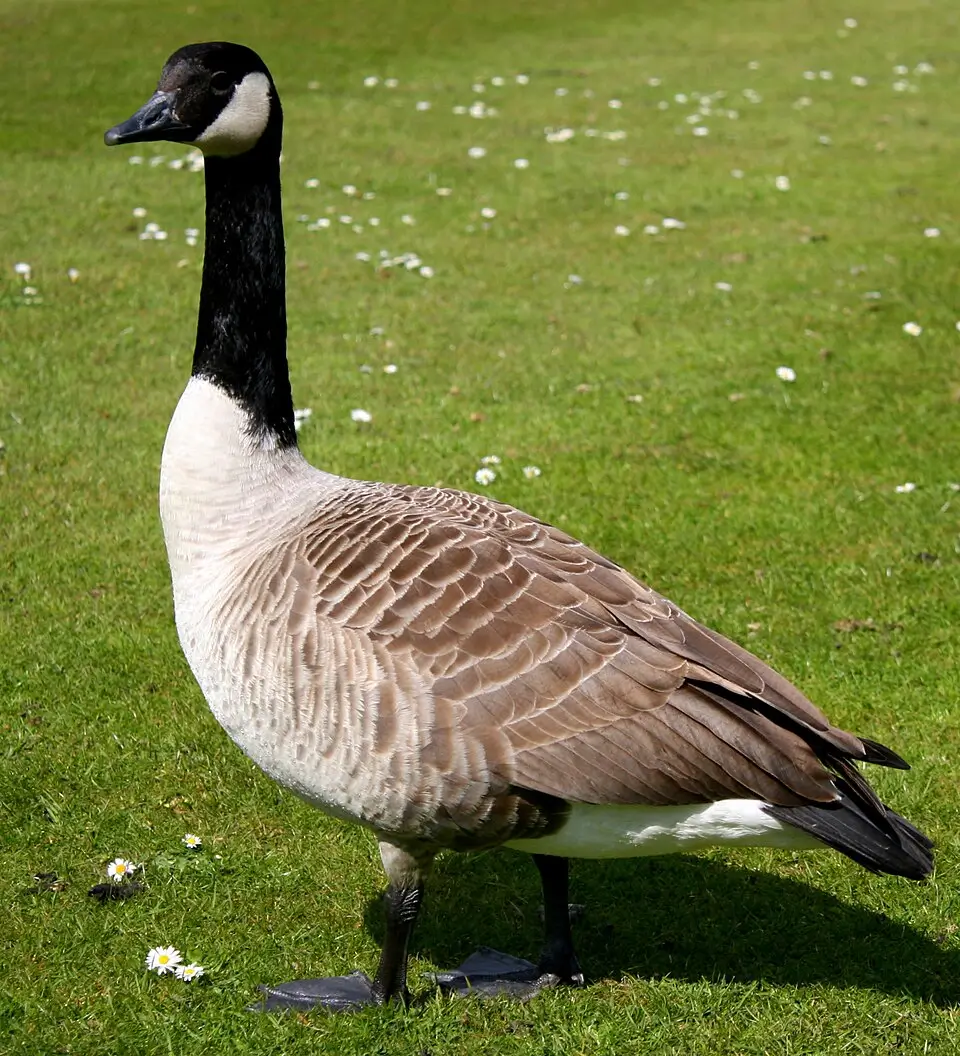
One of the most distinctive features of the Canada goose is its bold, unmistakable plumage. Adults display a classic combination of a black head and long neck, sharply contrasted by a white chinstrap patch that extends from cheek to cheek beneath the throat. The body is typically brownish-tan on the back and sides, with a lighter, often creamy-white breast and belly. The tail and rump area is dark, bordered by white undertail coverts that flash prominently in flight. Both males (ganders) and females (geese) share this coloration, making the sexes visually similar to the casual observer, though males tend to be noticeably larger in body size.
Canada geese are among the larger waterfowl species in North America. Depending on the subspecies, adults can weigh anywhere from just a few pounds in the smaller races to well over twenty pounds in the Giant Canada goose. Their wingspan is broad and powerful, enabling them to undertake some of the most impressive migratory journeys in the avian world.
Perhaps one of the most fascinating aspects of Canada goose biology is their strong pair bonding and family loyalty. These birds are monogamous, forming long-term pair bonds that often last for the lifetime of both individuals. Nesting typically begins in early spring, with females selecting nest sites near water — often on elevated ground, small islands, or platforms — where they lay clutches of eggs incubated for roughly a month. Goslings hatch covered in yellow-green down and are remarkably precocial, capable of walking, swimming, and feeding within hours of hatching. Family groups remain tightly bonded through the first year of life, with young geese migrating alongside their parents and learning critical survival skills through direct observation.
Canada geese are also well known for their vocal communication. The classic, resonant "honk" is perhaps the most universally recognized bird call in North America, but the species actually employs a surprisingly diverse repertoire of vocalizations used to communicate alarm, aggression, contact, and contentment within the flock.
Habitat & Range
The Canada goose is a bird of extraordinary ecological flexibility. Originally a species of wild, remote landscapes — arctic tundra breeding grounds, coastal marshes, prairie potholes, and boreal lake edges — the Canada goose has successfully adapted to an astonishing range of human-altered environments. Today, populations thrive in urban parks, suburban golf courses, corporate campuses, and agricultural fields, making the species one of the most commonly encountered large birds across the continent.
The species' range spans virtually all of North America. Breeding populations are found from the high arctic regions of Canada and Alaska southward through much of the contiguous United States. During winter months, birds concentrate in areas where open water and food resources remain accessible, including the Gulf Coast states, the Pacific Coast, and the agricultural heartland of the Midwest and South.
North Dakota occupies a particularly important position within the Canada goose's continental range. As part of the Great Plains and the famed Prairie Pothole Region — one of the most productive waterfowl habitats on Earth — North Dakota provides critical staging and migration habitat for vast numbers of Canada geese moving between their northern breeding grounds and southern wintering areas. The state's broad prairies, abundant wetlands, and extensive agricultural fields, rich with waste grain, offer ideal conditions for geese during both spring and fall migration. The Missouri River corridor and the many lakes, reservoirs, and wetland complexes scattered across the state serve as important resting and feeding areas for migrating flocks.
Some populations of Canada geese, particularly larger subspecies, have established resident or semi-resident populations that remain in northern states like North Dakota year-round or depart only briefly during the coldest winter periods.
Hunting Information
The Canada goose holds an honored place in North American hunting tradition. Waterfowl hunting, and goose hunting in particular, has deep roots in the rural communities of states like North Dakota, where agriculture and wildlife habitat intertwine across millions of acres of productive land. For generations, hunters have gathered in fields and blinds before dawn, calling geese down from passing flocks in one of the most challenging and rewarding forms of wing shooting available.
North Dakota is widely regarded as one of the premier Canada goose hunting destinations in the United States. The state's position along the Central Flyway — one of the great migratory corridors of North America — ensures that large numbers of geese move through the region each autumn, providing outstanding hunting opportunities for resident and visiting hunters alike. The combination of agricultural fields, prairie wetlands, and vast public and private lands creates a diverse landscape well-suited to a variety of goose hunting approaches, from field hunting over full-body decoys to pass shooting along river corridors.
Hunting Canada geese in North Dakota falls under the regulatory framework established by the North Dakota Game and Fish Department in coordination with the U.S. Fish and Wildlife Service, as waterfowl are managed as a federal migratory game bird resource. Hunters pursuing Canada geese in North Dakota are required to obtain the appropriate licenses and permits as outlined by North Dakota Game and Fish. Because Canada geese are migratory birds, federal regulations and the Harvest Information Program (HIP) apply, and hunters should consult the most current regulations provided by North Dakota Game and Fish for specific season dates, bag limits, and licensing requirements, as these details are subject to annual adjustment.
The pursuit of Canada geese demands a combination of skill, patience, and preparation. Successful goose hunters invest considerable effort in scouting feeding and roosting areas, setting realistic and well-spread decoy spreads, and mastering the art of calling — a skill that can make the difference between a memorable hunt and a frustrating morning. Layout blinds concealed in harvested grain fields, pit blinds, and natural vegetation cover are all popular techniques employed by North Dakota goose hunters.
Beyond the sporting tradition, Canada goose hunting plays an important role in population management, helping wildlife managers maintain healthy and sustainable goose populations in balance with available habitat.
Conservation
The conservation story of the Canada goose is one of the great wildlife management successes of the twentieth century. By the mid-1900s, several subspecies of Canada goose — including the Giant Canada goose — had been dramatically reduced in numbers due to habitat loss, market hunting in earlier eras, and other pressures. Targeted conservation efforts, including habitat protection, regulated hunting seasons, and active restoration programs, led to remarkable population recoveries that have continued through the present day.
Today, Canada goose populations are robust and, in many areas, highly abundant. The species serves as an important indicator of wetland ecosystem health and as a flagship species for waterfowl conservation broadly. Organizations dedicated to wetland preservation, such as those active in North Dakota's Prairie Pothole Region, work continuously to protect and restore the habitats upon which Canada geese and hundreds of other wildlife species depend.
The regulatory system governing Canada goose hunting — coordinated between federal agencies, state wildlife departments like North Dakota Game and Fish, and conservation partners — represents a model of science-based wildlife management that has delivered lasting benefits for both geese and the people who pursue them.