Overview
Few creatures embody the spirit of wild North America quite like the bobcat. Compact, powerful, and supremely elusive, the bobcat (Lynx rufus) is the continent's most widespread and abundant wild cat, ranging from the sun-baked deserts of northern Mexico to the dense boreal forests bordering southern Canada. Despite sharing territory with millions of people across dozens of states, the bobcat remains a largely secretive and rarely observed animal — a phantom of the wilderness that leaves behind little more than a track in soft mud or a tuft of fur on a fence post.
In North Dakota, the bobcat represents a fascinating intersection of Great Plains ecology and predator biology. The state's sprawling prairies, rugged badlands, and river-bottom woodlands provide surprisingly suitable habitat for this adaptable feline. Understanding the bobcat — its biology, behavior, habitat preferences, and role in the ecosystem — deepens our appreciation for one of North America's most captivating predators.
Biological Traits
The bobcat belongs to the family Felidae and the genus Lynx, making it a close relative of the Canada lynx (Lynx canadensis), the Eurasian lynx (Lynx lynx), and the Iberian lynx (Lynx pardinus). The species name rufus is Latin for "red" or "reddish," a nod to the animal's characteristic tawny, reddish-brown coat.
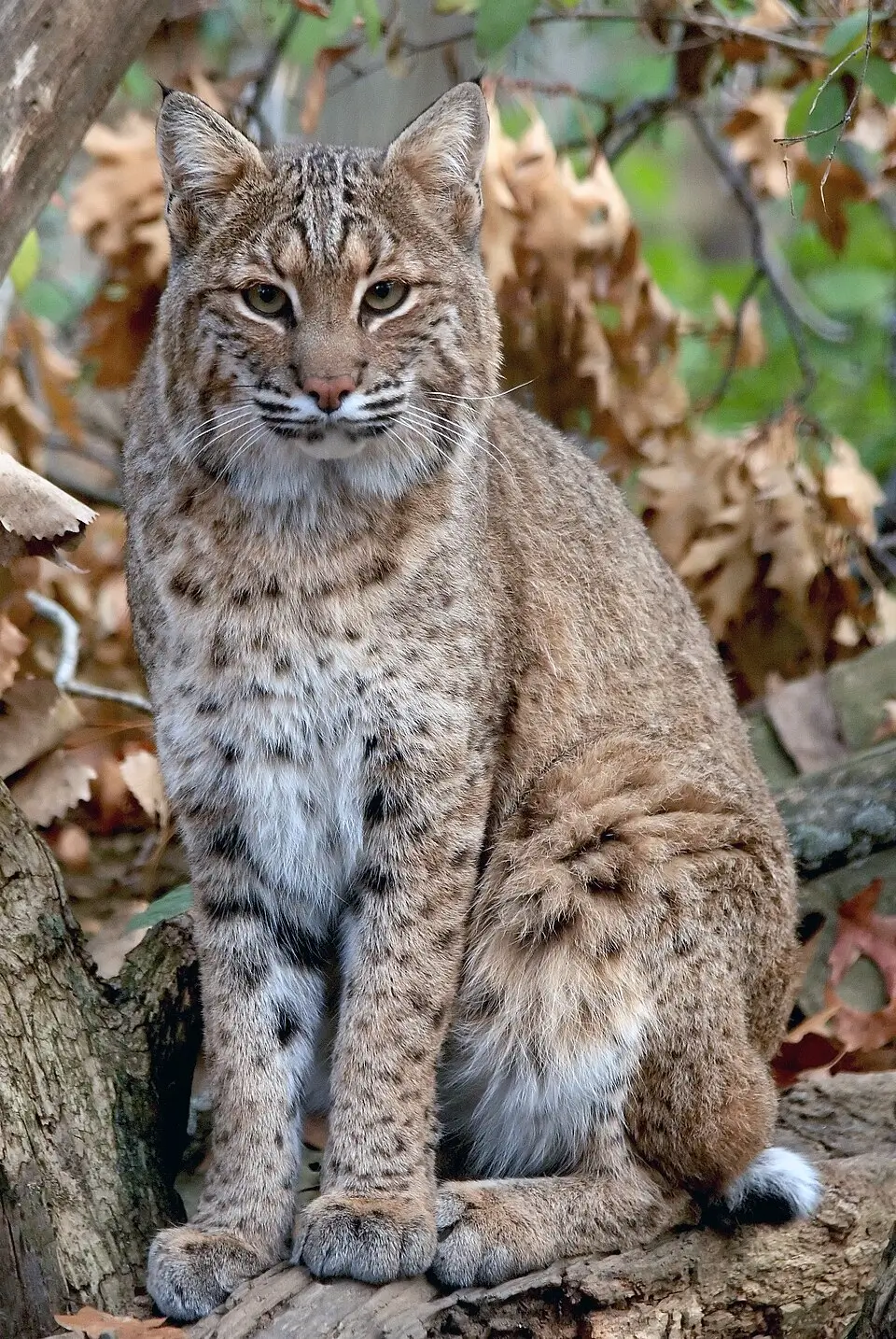
Physically, the bobcat is a medium-sized felid, noticeably larger than a domestic house cat but considerably smaller than a mountain lion. Adults typically weigh between 11 and 30 pounds, though males are substantially larger than females — a pronounced sexual dimorphism common among wild cats. The body is muscular and compact, built for explosive bursts of speed and agile, silent movement through dense cover.
The bobcat's coat is one of its most distinctive features. The fur ranges from pale gray and light brown to deep reddish-brown, patterned with dark streaks and spots that provide excellent camouflage across a variety of terrains. The underparts are white and lightly spotted. Perhaps the most recognizable feature of the bobcat is its namesake "bobbed" tail, which measures only four to seven inches in length and displays a distinctive black tip on top with white or pale coloring underneath — a useful field identification mark that distinguishes it from the Canada lynx.
The face is framed by a ruff of longer fur, and the ears are tipped with short black tufts, though these tufts are less pronounced than those of the Canada lynx. The hind legs are noticeably longer than the front legs, giving the bobcat a characteristic slightly hunched appearance when walking and contributing to its impressive leaping ability.
Bobcats are obligate carnivores with sharp, retractable claws and powerful jaws adapted for gripping and killing prey. Their eyes are large and forward-facing, providing excellent binocular vision suited for low-light conditions. Like most wild cats, bobcats are primarily crepuscular and nocturnal hunters, though they can be active at any hour when conditions favor a successful hunt.
As solitary animals, bobcats are highly territorial. Adult males maintain large home ranges that may overlap with the smaller ranges of several females but rarely overlap with those of other males. Territory is marked through scent marking — using urine, feces, and secretions from facial and anal glands — as well as by scratching trees and logs.
Bobcats communicate through a range of vocalizations including hisses, growls, yowls, and piercing screams, particularly during the mating season. Breeding typically occurs in late winter, with females giving birth to litters of one to six kittens after a gestation period of approximately 60 to 70 days. Kittens are born blind and helpless, remaining with their mother for several months as they learn to hunt and survive independently.
The primary prey of bobcats across most of their range is the cottontail rabbit and other lagomorphs. However, bobcats are remarkably opportunistic and adaptable hunters, capable of taking prey ranging from small mice and squirrels to white-tailed deer — particularly fawns or weakened adults during winter months. Birds, reptiles, and even insects may round out the diet when preferred prey is scarce.
Habitat & Range
The bobcat is extraordinarily adaptable in its habitat preferences, a quality that has allowed it to thrive across a wider range than any other wild cat in the Western Hemisphere. The species occurs throughout most of the contiguous United States, southern Canada, and northern Mexico, inhabiting environments as diverse as subtropical swamps, arid deserts, temperate forests, and open grasslands.
In North Dakota, bobcats are most commonly associated with the state's more rugged and wooded landscapes. The dramatic badlands of the western part of the state — with their broken terrain, coulees, rocky outcroppings, and patches of juniper and cedar — provide ideal denning and hunting habitat. River corridors, particularly those lined with cottonwood, ash, and dense shrub cover, serve as important travel routes and year-round habitat. The Little Missouri River system, for example, supports bobcat populations within some of the most scenic and wildlife-rich terrain in the Northern Great Plains.
North Dakota's broader landscape context is important. As a Great Plains state, much of the terrain is open and agricultural, which is generally less favored by bobcats. However, the patchwork of shelterbelts, creek drainages, and native grasslands scattered across the state provides corridors that allow bobcats to move and establish territories in areas that might otherwise seem inhospitable.
The state's climate presents challenges for bobcats. North Dakota is known for harsh winters with deep snow and extreme cold, conditions that can limit prey availability and increase the energetic costs of survival. Deep snow is particularly challenging for bobcats, which — unlike the Canada lynx — do not have large, snowshoe-like paws adapted for travel over soft snow. For this reason, bobcat populations in North Dakota tend to be most robust in areas where terrain and vegetation provide some shelter from the elements.
Hunting Information
The bobcat is classified as a furbearer in North Dakota, and the North Dakota Game and Fish Department oversees the management and regulation of bobcat hunting and trapping within the state. Hunters and trappers interested in pursuing bobcats in North Dakota should consult the most current regulations published by the North Dakota Game and Fish Department, as season dates, licensing requirements, and any applicable harvest limits are subject to change and must be verified before going afield.
According to available information from the North Dakota Game and Fish Department, the department provides hunting information organized by species, covering furbearers alongside big game, upland game, and other wildlife categories. Licensing requirements and any applicable regulations for bobcat hunting and trapping in North Dakota are managed through the department's licensing system.
Bobcat hunting is pursued through several methods across the United States. Calling — using electronic or mouth-blown calls that mimic the sounds of distressed prey animals such as rabbits — is among the most popular and effective methods. A skilled caller can lure a curious or hungry bobcat within range in suitable habitat. Still-hunting and stalking through known bobcat territory are also practiced, as is hunting with hounds, where legal. Trapping remains a significant harvest method as well, with foothold traps, bodygrip traps, and cage traps all employed depending on state regulations and personal preference.
For hunters pursuing bobcats in North Dakota specifically, focusing efforts on the state's badlands and river-bottom habitats during legal season periods offers the best opportunity for success. Scouting for tracks, scrapes, and other sign in soft soil or snow near creek drainages and rocky outcrops can help identify productive areas. Early morning and late evening hours — when bobcats are most naturally active — are traditionally the most productive times to be in the field.
Conservation
The bobcat's conservation status is relatively positive compared to many wild cat species worldwide. The species is listed as Least Concern on the IUCN Red List, reflecting its wide distribution, substantial total population, and adaptability to a range of habitats and human-altered landscapes. In the United States, bobcat populations have generally been stable or increasing in recent decades, benefiting from regulated harvest management, habitat conservation, and recovery in areas where they were historically reduced.
Bobcats play an important ecological role as mid-level predators. By regulating populations of rabbits, rodents, and other small to medium-sized prey, they help maintain balanced, healthy ecosystems. The removal or significant reduction of bobcat populations can trigger cascading effects through the food web, leading to prey population explosions and associated impacts on vegetation and other wildlife.
In North Dakota, the bobcat exists near the northern edge of its core range, and populations are naturally influenced by the state's challenging climate and the availability of suitable habitat. Responsible management by the North Dakota Game and Fish Department, guided by population monitoring and harvest data, ensures that bobcat hunting and trapping remain sustainable activities that support both conservation goals and the traditions of North Dakota's hunting and trapping heritage.
Landowner cooperation is also vital to bobcat conservation on the Great Plains. The preservation of native grasslands, river-bottom woodlands, and brushy cover on private and public lands directly benefits bobcats and the prey species upon which they depend.