Overview
Few animals capture the spirit of wild, rugged North America quite like the bighorn sheep (Ovis canadensis). With their massive, curling horns and sure-footed grace along sheer cliff faces, bighorn sheep have long been symbols of wilderness and resilience. These magnificent animals inspire awe in hikers, wildlife photographers, and hunters alike, representing the best of what North America's diverse landscapes have to offer. From the towering Rocky Mountains to the sun-scorched deserts of the Southwest and the dramatic badlands of the Northern Great Plains, bighorn sheep occupy some of the most spectacular terrain on the continent.
For hunters, the bighorn sheep represents one of the most coveted and challenging pursuits in all of North American big game hunting — a true "bucket list" trophy that demands physical fitness, patience, and dedication. For wildlife enthusiasts, they represent a conservation success story, having rebounded from dangerously low population numbers in the early twentieth century to inhabit protected and managed landscapes across the western United States and Canada. Understanding the biology, habitat needs, and management of bighorn sheep enriches our appreciation for these extraordinary animals and the wild places they call home.
Biological Traits
The bighorn sheep, Ovis canadensis, belongs to the family Bovidae and is one of three species of mountain sheep found in North America, alongside Dall sheep (Ovis dalli) and Stone sheep (Ovis dalli stonei). The species name canadensis reflects the fact that early scientific specimens were collected in Canada, though the animal's range extends far south into the United States and Mexico.
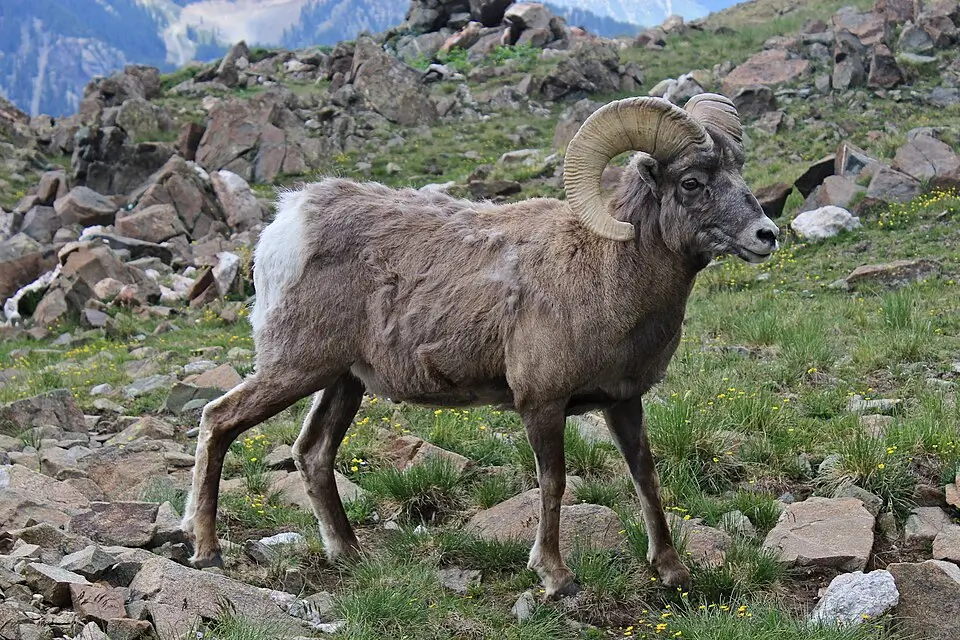
Perhaps the most defining physical characteristic of the bighorn sheep is, as its name suggests, its extraordinary horns. Both males (rams) and females (ewes) grow horns, but it is the rams that develop the truly spectacular curved horns for which the species is famous. These horns are composed of a bony core covered by a keratin sheath — the same material that makes up human fingernails — and they are permanent structures that continue growing throughout the animal's life. A mature ram's horns can form a nearly complete curl, known as a "full curl," and the sheer mass and size of these horns are among the most impressive headgear found on any North American big game animal.
Bighorn sheep are sexually dimorphic, meaning males and females differ significantly in size and appearance. Rams are considerably larger than ewes and are distinguished by their massive, tightly curved horns, while ewes carry shorter, less curved horns. Rams engage in dramatic head-butting contests during the rut — the annual breeding season — with rival males charging at each other at high speeds and clashing horns with tremendous force. These battles can last for hours and are used to establish dominance and breeding rights within a group. The animals have specialized skull structures and thick, cushioning horns that help absorb the enormous impact of these collisions.
Bighorn sheep are highly social animals that live in herds. Outside of the breeding season, rams and ewes typically live in separate groups. Ewes, lambs, and young animals form nursery herds, while mature rams form bachelor groups. During the rut, typically in the fall and early winter, rams seek out ewe groups and competition for breeding rights intensifies. Lambs are generally born in the spring, and ewes typically give birth to one lamb at a time. Lambs are precocial — born relatively well-developed — and can follow their mothers over rocky terrain within just days of birth.
Bighorn sheep are well-adapted to their challenging mountain and canyon environments. Their hooves have hard outer edges that grip rock surfaces and soft inner pads that provide traction, making them remarkably agile on steep, rocky terrain. Their eyesight is excellent, allowing them to detect predators such as mountain lions, wolves, coyotes, and eagles from great distances. Their stocky, muscular bodies are well-suited for navigating vertical terrain that would be impassable for most other large mammals.
Habitat & Range
Bighorn sheep occupy a wide variety of habitats across western North America, from alpine meadows and rocky mountain slopes to desert canyon lands and semi-arid grasslands. They are generally found in areas where steep, rocky terrain provides both forage and escape cover from predators. The ability to quickly retreat to near-vertical cliff faces is one of the bighorn sheep's most important survival strategies, and they are rarely found far from rocky terrain that offers this protection.
The species' range extends from British Columbia and Alberta in Canada through much of the western United States, including states such as Montana, Wyoming, Colorado, Idaho, Nevada, California, Utah, Arizona, New Mexico, and others. In the Northern Great Plains region, bighorn sheep are associated with the rugged badlands formations — dramatic landscapes of eroded buttes, steep ravines, and rocky outcrops that provide the kind of broken terrain the species requires. North Dakota's badlands, located primarily in the western part of the state, represent the eastern edge of meaningful bighorn sheep habitat in the United States.
Bighorn sheep are grazers, feeding primarily on grasses, sedges, and forbs. In desert environments, they will also browse on shrubs and other vegetation. Access to water and mineral licks is also important to their health and movement patterns.
Hunting Information
Hunting bighorn sheep is considered one of the pinnacle experiences in North American big game hunting. The physical demands of pursuing these animals in steep, high-elevation terrain, combined with the rarity and exclusivity of bighorn sheep tags, make a successful bighorn sheep hunt a lifetime achievement for many hunters.
In North Dakota, bighorn sheep hunting is tightly regulated, reflecting both the limited population of sheep in the state and the state's commitment to sound wildlife management. According to the North Dakota Game and Fish Department, licenses for bighorn sheep are allocated by lottery. This means that hunters who wish to pursue bighorn sheep in North Dakota must apply for a tag through a draw process, and the number of licenses issued is carefully controlled to ensure that hunting pressure remains sustainable for the population.
This lottery system is common across western states and provinces where bighorn sheep are found. The odds of drawing a bighorn sheep tag in any given state can be quite low, and some hunters apply for many years before being successful in the draw. This scarcity makes a drawn bighorn sheep tag an extraordinarily prized possession among big game hunters.
Hunters pursuing bighorn sheep should be prepared for physically demanding conditions. Whether hunting in alpine environments or the rugged badlands terrain of western North Dakota, sheep hunting typically involves long days of glassing with binoculars and spotting scopes, covering significant distances on foot, and being prepared to make difficult shots in challenging terrain and weather conditions. Physical fitness and preparation are essential components of a successful bighorn sheep hunt.
For those interested in applying for a bighorn sheep license in North Dakota, the North Dakota Game and Fish Department is the authoritative source for current regulations, application periods, and license availability. Hunters are encouraged to consult the department's official resources for the most up-to-date information, as regulations and drawing procedures can change from year to year.
Conservation
The story of bighorn sheep conservation in North America is one of the most compelling wildlife management narratives of the past century. By the early 1900s, bighorn sheep populations had been drastically reduced from their historic levels due to a combination of factors including overhunting, habitat loss, competition with domestic livestock, and disease transmission from domestic sheep. In some parts of their range, local populations were eliminated entirely.
Through sustained conservation efforts, including legal protection, reintroduction programs, habitat management, and carefully regulated hunting — with revenues from hunting licenses and federal excise taxes on firearms and ammunition contributing directly to wildlife management — bighorn sheep populations have made meaningful recoveries across much of their range. Organizations dedicated to wild sheep conservation have partnered with state and federal wildlife agencies to fund population surveys, disease research, and transplant programs that have helped re-establish sheep in suitable habitats where they had been lost.
Today, bighorn sheep remain a managed species across their range, with populations carefully monitored by wildlife biologists. The regulated hunting of bighorn sheep plays an important role in modern conservation, generating both funding for management programs and strong public support for the protection of wild sheep habitat.
In North Dakota, the presence of bighorn sheep in the badlands is a testament to both the quality of the habitat and the ongoing commitment of wildlife managers and conservation-minded sportsmen and women to protecting these iconic animals. The state's use of a lottery system for bighorn sheep licenses reflects a precautionary and science-based approach to managing a wildlife resource that is both ecologically valuable and deeply cherished by hunters and wildlife enthusiasts alike.
The bighorn sheep stands as a powerful symbol of what is possible when science, conservation funding, and public commitment to wildlife management work together. Ensuring that future generations can witness a mature ram navigating a rocky ridgeline — horns gleaming in the morning light — is a goal shared by hunters, wildlife photographers, biologists, and outdoor enthusiasts across North America.