The Wood Duck: A Jewel of North American Wetlands
The wood duck (Aix sponsa) stands as one of the most visually striking and ecologically fascinating birds in North America. Often referred to as the "woodie," this perching duck is renowned for its iridescent plumage, unique nesting habits, and remarkable conservation success story. Unlike many waterfowl species that favor open waters, the wood duck is intimately associated with forested wetlands, swamps, and slow-moving streams, earning its common name from its propensity to nest in tree cavities. Its scientific name, Aix sponsa, translates to "bridal duck," a nod to the male's exceptionally ornate and colorful appearance, which has captivated birdwatchers, hunters, and naturalists for centuries. This article delves into the biological traits, habitat preferences, general hunting context, and conservation journey of this remarkable species, providing a comprehensive overview of one of nature's most beautiful waterfowl.
Biological Traits
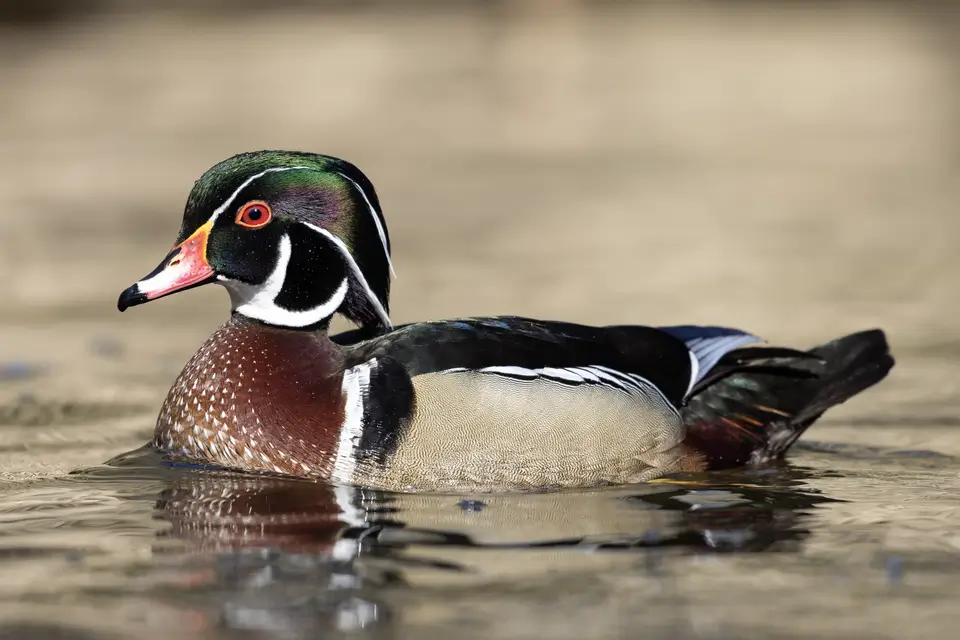
The wood duck is a medium-sized perching duck, exhibiting pronounced sexual dimorphism, meaning males and females look distinctly different. The adult male, or drake, is arguably the most colorful of all North American waterfowl. During the breeding season, its head is adorned with iridescent green and purple feathers, intricately patterned with bold white stripes. A distinctive white chin patch and a drooping, feathered crest that extends from the back of the head complete the head's stunning profile. The chest is a deep reddish-brown with white flecks, transitioning to a finely barred, buff-colored side. The belly is white, and the wings are a mix of blue, black, and white, with a speculum (wing patch) that shimmers in blue. The bill is short and dark, often with subtle red tones, and the eyes are a striking red. In contrast, the adult female, or hen, presents a more subdued, yet elegantly refined appearance. Her plumage is primarily grayish-brown, with a subtle gloss on the wings. She possesses a distinctive teardrop-shaped white ring around each eye, which contrasts sharply with her darker head. A subtle crest is also present, and her bill is often grayish.
Both sexes have a unique adaptation among ducks: they possess sharp, clawed toes, which are particularly well-developed for gripping bark. This anatomical feature is essential for their lifestyle, allowing them to perch comfortably on branches and easily climb in and out of tree cavities. Juveniles of both sexes resemble the female but with duller, less defined markings.
In terms of size, wood ducks are smaller than a mallard. They typically measure between 47 to 54 centimeters (19 to 21 inches) in length, with a wingspan that can reach up to 73 centimeters (29 inches). Their weight ranges from approximately 454 to 862 grams (16 to 30 ounces), with males generally being slightly larger than females. Their flight is rapid and agile, characterized by a distinctive silhouette with a long tail and a quick, continuous wingbeat that allows them to maneuver effortlessly through dense woodland corridors.
Their vocalizations are another distinctive trait. The male's call is a thin, rising, and whistling "jeeee" or "sweek-eek," often given in flight. The female's call is more complex, consisting of a loud, decrescendo "oo-eek, oo-eek" when flushed, and a softer, cooing "cr-r-eek, cr-r-eek" used in communication with other ducks or her brood.
Habitat & Range
The wood duck is a species of the North American continent, with its breeding range extending across the eastern United States, the Pacific Northwest, and into southern Canada. It is a year-round resident in parts of the southeastern United States, including the Mississippi Flyway. Populations in the northern parts of the range are migratory, wintering in the southern United States and into Mexico.
True to its name, this duck is inextricably linked to aquatic environments that are surrounded by trees. Their primary habitats include bottomland hardwood forests, swamps, freshwater marshes, beaver ponds, and the edges of lakes and slow-moving rivers. They require two critical components for survival: water for feeding and loafing, and mature trees with natural cavities for nesting. The availability of suitable nesting sites is often a limiting factor for their populations. They readily use artificial nest boxes when natural cavities are scarce, a fact that has been crucial to their conservation.
For feeding, wood ducks frequent shallow waters where they dabble or tip-up to reach submerged vegetation, seeds, and aquatic invertebrates. Their diet is predominantly vegetarian, consisting of seeds from various water plants like duckweed, smartweeds, and water lilies, as well as acorns, fruits, and nuts from surrounding trees. Insects, snails, and other small animal matter become especially important during the breeding season and for the growth of ducklings. This diverse diet allows them to thrive in a variety of wetland ecosystems throughout their range.
When considering their presence in a state like Arizona, which is characterized by a generally arid, Southwestern landscape, it's important to note that wood ducks are not typically associated with the dominant desert and plateau ecosystems. Their occurrence in such regions would be highly localized and dependent on the presence of specific riparian corridors—lush, green strips of vegetation along permanent rivers, streams, or ciénegas. These isolated habitats provide the necessary water and towering cottonwood or sycamore trees that wood ducks require. Sightings in Arizona would therefore be considered uncommon or rare, often representing vagrants or birds utilizing specific, suitable microhabitats within the state's limited riparian zones.
Hunting Information
The wood duck has been a popular and prized game bird for waterfowl hunters across its range. Its striking beauty adds a unique aesthetic appreciation to the hunting experience, and its agile flight through wooded areas presents a challenging and exciting target. Hunting seasons and bag limits for wood ducks, like all migratory birds in the United States, are not set by individual states alone but are established within a framework provided by the federal Migratory Bird Treaty Act (MBTA). The U.S. Fish and Wildlife Service (USFWS) sets overall season frameworks, including bag limits and season dates, based on annual population surveys and management goals. Within these federal guidelines, individual states then set their specific seasons, which can vary by zone within the state.
For a state such as Arizona, official and specific hunting regulations, including season dates, bag limits, and any special requirements for wood ducks, would be detailed by the Arizona Game and Fish Department (AZGFD). As the provided source data does not contain specific Arizona hunting regulations, any prospective hunter must consult the most recent annual hunting regulations published by the AZGFD. These publications provide essential, legally binding information on licensing, required permits (such as the Federal Duck Stamp and state migratory bird validations), legal hunting hours, approved ammunition (non-toxic shot is required for all waterfowl hunting), and area-specific rules.
Generally, waterfowl hunting is managed to ensure sustainable populations. Habitat conservation, through the protection and restoration of wetlands on both breeding and wintering grounds, is fundamental to maintaining huntable populations of wood ducks and other waterfowl. The purchase of hunting licenses and Federal Duck Stamps directly funds these conservation efforts, creating a vital link between hunters and the preservation of the species they enjoy.
Conservation
The story of the wood duck is one of the most celebrated conservation successes in North American wildlife management. In the late 19th and early 20th centuries, wood duck populations plummeted to alarmingly low levels due to two primary factors: unsustainable market hunting for the millinery (hat) trade and, most critically, the widespread loss of forested wetland habitat. The draining of swamps for agriculture and development destroyed vast areas of their essential nesting and feeding grounds. By the early 1900s, many feared the species was on the brink of extinction.
A series of decisive actions led to their remarkable recovery. The Migratory Bird Treaty Act of 1918 provided crucial federal protection, effectively banning unregulated hunting. Concurrently, conservationists pioneered the use of artificial nest boxes to compensate for the scarcity of natural tree cavities. These efforts, combined with the regrowth of forests in some areas and the creation of wildlife refuges, allowed wood duck populations to rebound dramatically. The North American Waterfowl Management Plan, an international partnership, continues to focus on restoring the wetland habitats critical for wood ducks and other waterfowl.
Today, the wood duck population is estimated to be in the millions and is considered stable or increasing in many parts of its range. It stands as a powerful testament to how concerted conservation action, driven by science and public support, can reverse the decline of a species. The continued protection of bottomland hardwood forests and riparian zones remains essential not only for wood ducks but for a multitude of other wildlife species that depend on these rich ecosystems. For birdwatchers and hunters alike, the sight of a male wood duck in pristine breeding plumage is a direct and beautiful result of these dedicated conservation efforts.
Frequently Asked Questions
What does a wood duck look like?
The male wood duck is exceptionally colorful, with an iridescent green and purple head marked with white stripes, a reddish-brown chest, and a distinctive crest. The female is more subdued in grayish-brown but has a prominent white teardrop-shaped ring around each eye.
Where do wood ducks live?
Wood ducks inhabit forested wetlands, swamps, beaver ponds, and slow-moving rivers across the eastern United States, the Pacific Northwest, and southern Canada. They require water for feeding and tree cavities for nesting.
Can you hunt wood ducks in Arizona?
Wood ducks are not typically found in Arizona's dominant desert landscapes. Their occurrence would be rare and limited to specific riparian habitats. For official hunting regulations, you must consult the annual hunting regulations published by the Arizona Game and Fish Department, as all migratory bird hunting is regulated under federal and state frameworks.
Why is the wood duck considered a conservation success?
Wood duck populations were nearly wiped out by habitat loss and overhunting in the early 20th century. Their recovery was achieved through federal protections like the Migratory Bird Treaty Act, widespread installation of artificial nest boxes, and wetland habitat restoration, making them a celebrated example of successful wildlife management.
What do wood ducks eat?
Their diet is mainly vegetarian, consisting of seeds from aquatic plants like duckweed and smartweeds, as well as acorns, fruits, and nuts. They also consume insects and snails, especially during the breeding season.