Abert's Squirrel: A Distinctive Resident of the Ponderosa Pine Forests
Introduction
In the high-elevation forests of the American Southwest, a striking and specialized rodent makes its home among the towering pines. The Abert's squirrel (Sciurus aberti) is a fascinating creature, instantly recognizable by its prominent ear tufts and its intricate ecological relationship with the ponderosa pine. This article explores the biology, habitat, and unique life history of this iconic tree squirrel, offering insight into its role within its ecosystem. Understanding the Abert's squirrel provides a window into the delicate balance of the mountainous woodlands it inhabits.
Biological Traits
The Abert's squirrel is a medium-sized tree squirrel, with adults typically measuring between 46 to 58 centimeters (18 to 23 inches) in total length, including a tail that accounts for nearly half its body length. Its weight generally ranges from 540 to 971 grams (about 1.2 to 2.1 pounds), though this can fluctuate seasonally based on food availability.
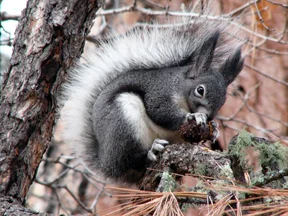
One of the squirrel's most defining characteristics is its large, prominent ear tufts, which are most pronounced during the winter months and can measure up to 3.8 centimeters (1.5 inches) in length. These tufts are believed to play a role in communication and possibly in heat regulation. The coloration of Abert's squirrels is notably variable, a feature that has led to the recognition of several geographic subspecies. The most common color morph features a largely gray back with a distinct rusty-red or dorsal stripe along the spine, a white underside, and a tail marked with gray and white bands. Some populations, particularly those in the southern part of their range such as in Arizona and New Mexico, can be predominantly black (melanistic) or brown (phaeomelanistic), creating a dramatic contrast against the pale bark of their host trees.
Their diet is highly specialized and heavily dependent on the ponderosa pine (Pinus ponderosa). A significant portion of their annual diet consists of the inner bark (phloem) of pine twigs, which they collect from fresh branch tips. This food source is rich in nutrients and accessible year-round, especially in winter. They also consume pine needles, buds, seeds (pine nuts), mushrooms, and occasionally acorns and other nuts when available. Their foraging behavior plays a crucial ecological role; by pruning branch tips, they can influence the growth form of the pines, and their middens (feeding sites) contribute to nutrient cycling in the forest floor.
Reproductively, Abert's squirrels typically have one litter per year. Breeding season occurs in early spring, following a period of increased activity and chasing among individuals. After a gestation period of approximately 44 days, females give birth to a litter of usually two to five young, called kits. The kits are born altricial (hairless and helpless) and are nursed in a nest, which is typically a cavity in a large tree or a substantial drey (a spherical nest of twigs and leaves built in the branches). The young grow rapidly, developing fur within a few weeks and opening their eyes around five weeks of age. They are weaned and begin to venture outside the nest at about 8 to 10 weeks, though they may remain with the mother for some time before dispersing to establish their own home ranges.
Habitat & Range
The Abert's squirrel is intrinsically linked to one specific forest type: mature ponderosa pine ecosystems. Its range is essentially a map of where these pines dominate the landscape. This squirrel requires large, old-growth ponderosa pines for both food and shelter. The trees provide the essential inner bark diet, as well as the cavities and dense branch structures needed for nesting and protection from predators and harsh weather.
Geographically, the species is found across the highlands of the southwestern United States and into north-central Mexico. Its range extends from the mountains of central Colorado and southern Wyoming, southward through New Mexico, Arizona, and into the extreme western portions of Texas. It also occurs in isolated mountain ranges in southeastern Utah, southwestern Nebraska, and across the border in the Mexican states of Chihuahua, Sonora, Durango, and Coahuila. Within this broad area, they are generally found at elevations ranging from about 1,800 to 3,000 meters (6,000 to 10,000 feet), corresponding with the preferred elevation band of the ponderosa pine.
The squirrel's habitat use is not random. They establish home ranges that typically vary from 10 to 40 hectares (25 to 100 acres) in size, depending on the density and quality of the forest. Within their home range, they are highly arboreal, spending the vast majority of their time in the canopy. Their presence is often indicated by well-worn trails along large branches and signs of foraging—piles of clipped twigs at the base of pines.
Hunting Information
As a game species, the Abert's squirrel is managed by state wildlife agencies within its range. It is considered a small game animal, and hunting it provides a recreational opportunity for many outdoor enthusiasts who appreciate the challenge of pursuing this wary, forest-dwelling creature.
Hunting methods often involve still-hunting or walking slowly through suitable ponderosa pine habitat, scanning the canopy and listening for the sound of twigs being clipped or for the squirrel's characteristic vocalizations, which include sharp barks and chucks. Because they spend most of their time in the treetops, hunters typically use rimfire rifles (.17 or .22 caliber) or shotguns with small shot. Accurate shot placement is important due to the small size of the target and the need to recover the animal.
Prospective hunters must consult the most current regulations from the specific state wildlife agency (such as Colorado Parks and Wildlife, the Arizona Game and Fish Department, or the New Mexico Department of Game and Fish) where they intend to hunt. These regulations are subject to change and will provide the official, legally binding information regarding:
* Open season dates and specific hunting units or zones.
* Licensing and tag requirements.
* Bag limits (the number of squirrels that can be legally harvested per day or in possession).
* Any special restrictions or legal hunting hours.
Ethical hunting practices are paramount. Hunters are encouraged to hunt safely, respect private property and other forest users, and utilize the harvested game. The meat of Abert's squirrels is lean and was historically an important food source for both indigenous peoples and early settlers in the region.
Conservation
The conservation status of the Abert's squirrel is generally considered stable across most of its range. The International Union for Conservation of Nature (IUCN) lists it as a species of "Least Concern" due to its relatively large total population and extensive geographic distribution. However, like many species with specialized habitat requirements, it faces localized threats.
The most significant threat to Abert's squirrel populations is the loss or fragmentation of old-growth ponderosa pine forests. This can occur due to several factors: large-scale logging operations that remove the mature trees the squirrels depend on, severe and extensive wildfires (often exacerbated by climate change and historical fire suppression policies), and outbreaks of bark beetles that can kill vast swaths of pine forest. The conversion of forest land for residential development or recreational facilities also reduces available habitat.
In areas where ponderosa pine forests are managed for timber production or with the goal of reducing wildfire risk through thinning, wildlife managers must balance these objectives with the habitat needs of species like the Abert's squirrel. Conservation strategies often focus on retaining stands of large-diameter pines and protecting riparian areas and other critical habitat components during forest management activities.
Because the squirrel is so closely tied to a single dominant tree species, its population health can serve as an indicator of the overall health of the ponderosa pine ecosystem. Ongoing monitoring of squirrel numbers and distribution helps biologists assess the effectiveness of forest management practices and the impacts of environmental change. For now, in the vast expanses of the Southwest's pine country, the sight of a tuft-eared squirrel leaping through the boughs remains a common and cherished experience, a symbol of the mature, healthy forests it calls home.
Frequently Asked Questions
What is the most distinctive feature of an Abert's squirrel?
The most distinctive feature is the large, prominent ear tufts, which are most visible during the winter.
What do Abert's squirrels primarily eat?
Their diet is highly specialized and primarily consists of the inner bark (phloem) of ponderosa pine twigs, along with pine needles, buds, and seeds.
Where can I find Abert's squirrels?
They are found in mature ponderosa pine forests across the southwestern United States, including Colorado, New Mexico, Arizona, and into north-central Mexico, typically at high elevations.
Is hunting for Abert's squirrels regulated?
Yes, as a small game species, their harvest is regulated by state wildlife agencies. Hunters must consult the specific state's current regulations for seasons, licensing, and bag limits.
What is a major threat to Abert's squirrel populations?
A major threat is the loss of old-growth ponderosa pine habitat due to factors like logging, severe wildfires, bark beetle outbreaks, and land development.