The American Woodcock: A Master of the Forest Floor
The American woodcock (Scolopax minor), often affectionately called the "timberdoodle" or "bog sucker," is one of North America's most intriguing and charismatic game birds. Unlike its coastal relatives, the snipes, the woodcock is a bird of the eastern and central forests, captivating observers with its unique behaviors, cryptic appearance, and spectacular aerial courtship displays. This comprehensive article delves into the fascinating world of the American woodcock, exploring its biological traits, habitat needs, the traditions of hunting it, and the conservation efforts that ensure its future.
Introduction
For birdwatchers, hunters, and naturalists alike, encountering an American woodcock is a memorable event. This plump, short-legged shorebird seems paradoxically out of place deep in the woods, far from any shore. Its entire existence is intricately tied to a specific mosaic of forest and field. From its comical, rocking walk to its high-pitched, peenting call at dusk, the woodcock is a symbol of young, regenerating forests and healthy ecosystems. While it is a popular and prized game bird across much of its range, its populations are carefully monitored, and its management is a classic example of wildlife conservation linked to sustainable use.
Biological Traits
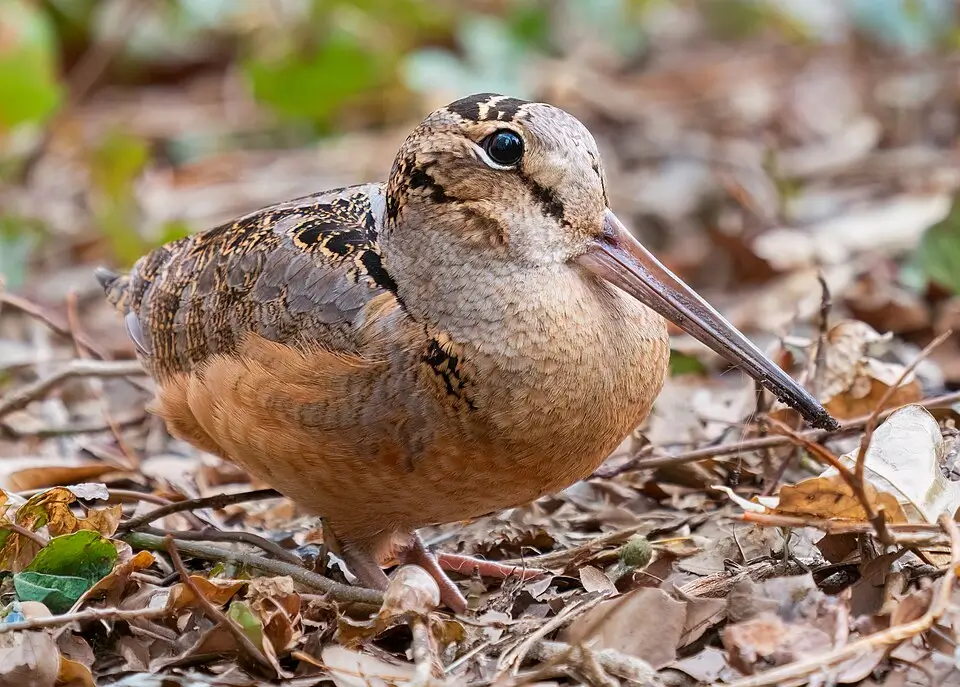
The American woodcock is a member of the sandpiper family (Scolopacidae), though it looks and behaves very differently from its kin. It is a compact bird, typically 10 to 12 inches in length with a wingspan of 16 to 18 inches, and weighing between 5 to 8 ounces. Its most distinctive feature is its long, straight, flexible bill, which can be over two inches long. The tip of the bill is uniquely sensitive, allowing the woodcock to detect earthworms and other invertebrates in the soil. The bird's eyes are set high and far back on its head, providing nearly 360-degree vision—a superb adaptation for watching for predators while it probes the leaf litter.
The plumage of the woodcock is a masterclass in camouflage. It consists of an intricate mix of russet browns, grays, and blacks, perfectly mimicking the dried leaves and shadows of the forest floor. When threatened, a woodcock will often freeze in place, becoming almost invisible. Its legs are short and set far back on its body, which gives it a distinctive, rocking gait as it walks.
Two remarkable biological behaviors define the woodcock: its feeding technique and its courtship display. To feed, it performs a characteristic "sewing machine" action, rapidly vibrating its upper body and bill as it probes the soil, using its sensitive bill tip to locate earthworms. The courtship display, however, is its most famous trait. At dawn and dusk during the spring breeding season, the male performs a "sky dance." From the ground, he emits a series of nasal peent calls. Then, he launches into the air in a wide, spiraling circle, ascending 200 to 350 feet. At the peak, he chirps and twittering sounds produced by modified outer primary feathers as he zigzags back down to the ground, often landing near a waiting female to begin the cycle again.
Habitat & Range
The woodcock's range extends across the eastern half of North America, from southeastern Canada down to the Gulf Coast states and as far west as the Great Plains. It is a migratory bird, with northern populations traveling south for the winter. Its habitat requirements are very specific and revolve around two key components: young forests for breeding and moist, worm-rich soils for feeding.
Breeding and Summer Habitat: Woodcock require areas of dense, young forest growth, typically 1 to 20 years old, often referred to as "thickets" or "cover." These areas, created by natural disturbances like fire or windthrow, or by human activities such as logging, provide the dense cover needed for nesting and protecting chicks. The female nests on the ground in these thickets. The ideal landscape is a mosaic that includes these young forest patches adjacent to older woods and small open areas for courtship displays.
Feeding and Wintering Habitat: For feeding, woodcock depend on moist, acidic soils rich in earthworms, their primary food. They favor alder swamps, bottomland hardwood forests, moist thickets, and the edges of streams and beaver ponds. During migration and winter, they seek out similar habitats in the southern states, including pine-hardwood forests and brushy bottomlands.
It is important to note that the American woodcock is not a bird found in the arid landscapes of the American Southwest. The state of Arizona, with its desert ecosystems, mountainous regions, and scrubland, does not constitute typical woodcock habitat. While accidental vagrants can occasionally appear far outside their normal range, there is no established population or regular migratory pattern for woodcock in Arizona. Consequently, the state is not part of the woodcock's recognized breeding, migratory, or wintering range as understood by ornithological science.
Hunting Information
The American woodcock is a cherished small game species, and hunting it is a time-honored tradition often accompanied by the use of pointing dogs like English setters and pointers. The hunting season is carefully regulated by state wildlife agencies within the guidelines set by the U.S. Fish and Wildlife Service under the Migratory Bird Treaty Act.
Regulations and Seasons: Hunting seasons are typically set in the fall, after the birds have begun their southern migration. States establish specific dates, daily bag limits, and possession limits to ensure sustainable harvest. Hunters are required to have a general hunting license and, in most states, a free Migratory Bird Harvest Information Program (HIP) permit. This permit helps biologists estimate harvest numbers and monitor population health.
Hunting Strategies: Hunting woodcock is about finding the right cover. Hunters and their dogs work through young alder stands, aspen thickets, and damp bottomlands where birds are concentrated. Because woodcock rely on camouflage and hold tight for pointing dogs, hunters must be ready for sudden, close-range flushes. The hunting is often fast-paced and exciting. Shotguns with improved cylinder or modified chokes and small shot sizes (7.5 or 8) are standard.
The Arizona Context: As previously noted, Arizona is not within the range of the American woodcock. Therefore, the Arizona Game and Fish Department does not offer a hunting season for this species. There are no season dates, bag limits, or specific regulations for woodcock hunting in Arizona because the birds are not present as a huntable population. Hunters interested in pursuing woodcock would need to travel to states within its primary range in the eastern or central United States, such as Minnesota, Wisconsin, Michigan, or states along the Atlantic and Gulf coasts.
Conservation
The conservation of the American woodcock is a proactive success story centered on habitat management. While not currently endangered, woodcock populations have experienced a gradual long-term decline, primarily due to the maturation of forests and the loss of the young forest habitats they depend on. Conservation efforts are therefore focused on creating and maintaining these critical habitats.
Management Practices: Wildlife agencies and conservation organizations like the Ruffed Grouse Society and the American Woodcock Society actively promote forest management techniques that mimic natural disturbances. This includes selective timber harvesting, prescribed burning, and the management of abandoned farmland to create early successional growth. These practices benefit not only woodcock but also a suite of other wildlife, including ruffed grouse, rabbits, songbirds, and pollinators.
Research and Monitoring: Long-term population monitoring is conducted through spring breeding bird surveys (the "Singing-ground Survey") and harvest data from hunters. Researchers also use satellite telemetry to study migration routes and identify key wintering areas, ensuring that habitats are protected across the bird's entire annual cycle.
The future of the American woodcock is intrinsically linked to active forest management. By promoting landscapes that are diverse in age and structure, conservationists ensure that this remarkable bird, with its sky dance and cryptic charm, will continue to be a part of the North American woods for generations to come.
Frequently Asked Questions
What does an American woodcock eat?
The American woodcock's primary diet consists of earthworms. It uses its long, flexible bill with a sensitive tip to probe moist soils for worms and other invertebrates. It may also consume some insects and plant material.
Why is the American woodcock also called a 'timberdoodle'?
'Timberdoodle' is a popular folk name for the American woodcock, likely originating from its habitat in forest 'timber' and its unique, somewhat dumpy or doodle-like appearance and waddling walk on the ground.
Can I hunt American woodcock in Arizona?
No, you cannot. The American woodcock is not found in Arizona, as the state's arid ecosystems are not within the bird's natural range. The Arizona Game and Fish Department does not have a hunting season for this species. Hunters must travel to eastern or central states where woodcock populations are present.
What is the most famous behavior of the American woodcock?
The most famous behavior is the male's spectacular aerial courtship display, known as the 'sky dance.' At dawn and dusk, the male flies in a wide, spiraling circle high into the air while making chirping sounds with his wings, then zigzags back down to earth, often while vocalizing a 'peent' call.
Is the American woodcock population declining?
Yes, long-term survey data indicates a gradual decline in American woodcock populations. The primary cause is the loss of young forest habitat due to forest maturation and changes in land use. Conservation efforts focus on creating and maintaining the thickets and young forests the birds require through active forest management.