The Striped Skunk: Nature's Boldly Marked Forager
The striped skunk, Mephitis mephitis, is one of North America's most immediately recognizable and ecologically fascinating mammals. Instantly identified by its striking black-and-white pelage, this medium-sized member of the family Mephitidae has carved out a successful niche across a vast range of the continent. Often misunderstood due to its formidable defensive capabilities, the striped skunk is, in reality, a beneficial creature that plays a crucial role in controlling insect and rodent populations. Its presence in diverse ecosystems, from forests to grasslands and even suburban neighborhoods, speaks to its remarkable adaptability. This article will delve into the biological traits, habitat preferences, general conservation status, and pertinent considerations regarding human interaction with this iconic animal, with specific attention to its presence in the Southwestern United States, including Arizona.
Biological Traits
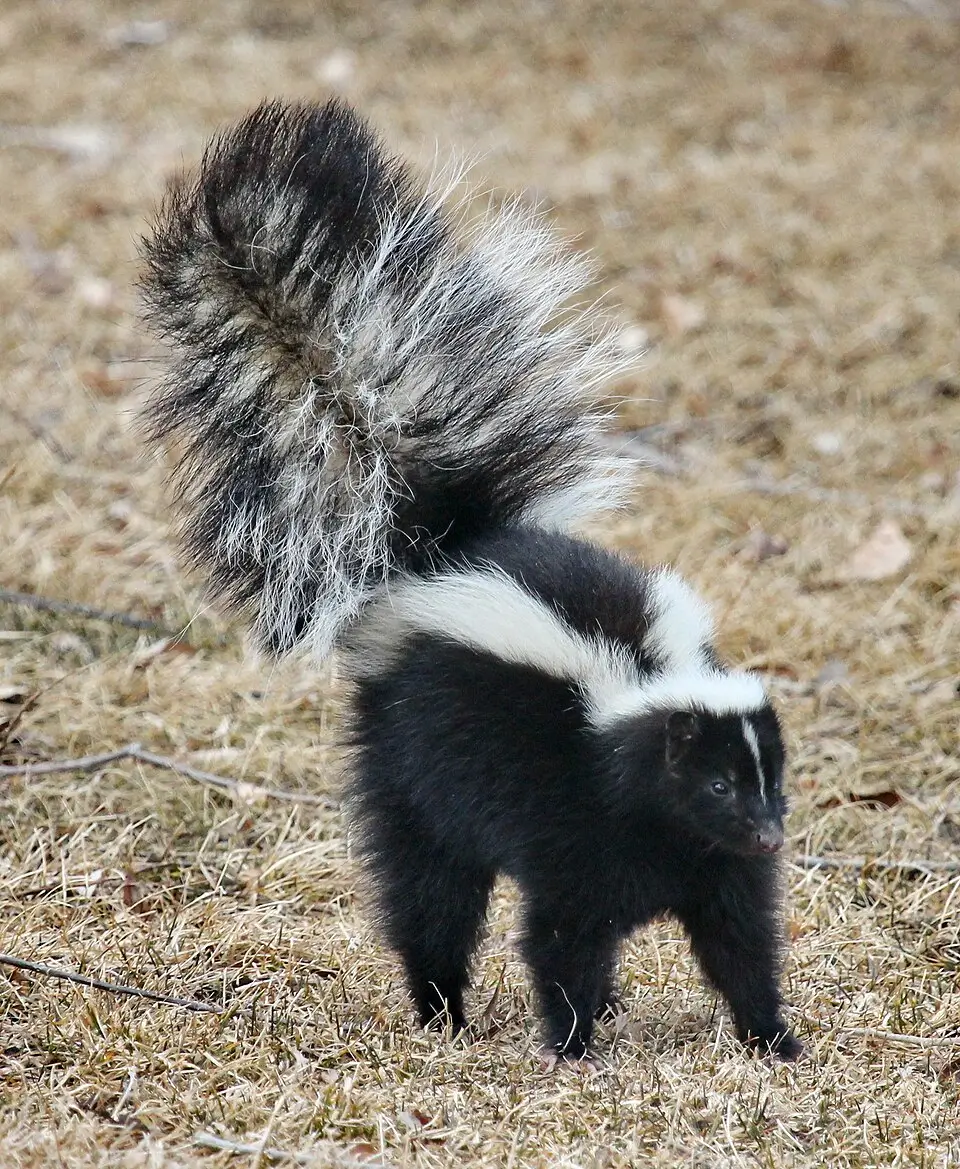
The striped skunk is a stout-bodied mammal with short legs and a distinctive, bushy tail that can account for nearly half of its total body length. Adults typically measure between 52 to 77 centimeters (20 to 30 inches) in length, including the tail, and weigh anywhere from 1.8 to 4.5 kilograms (4 to 10 pounds), with males generally being larger than females. Their most famous feature is their glossy black fur, adorned with a pattern of white stripes that provides a clear aposematic warning to potential predators. The classic pattern consists of a thin white stripe running from the nose to the forehead, which then splits into a broader stripe that extends down the back and onto the tail. However, variations exist, including spotted or swirled patterns, demonstrating the species' phenotypic diversity.
Skunks possess powerful scent glands located on either side of the anus, which produce a sulfur-containing chemical called a thiol. This potent secretion can be accurately sprayed in a fine mist up to several meters away and is notorious for its extremely foul, persistent odor. The spray is a last-resort defense mechanism; skunks provide numerous warnings before resorting to it, such as hissing, stomping their feet, raising their tail, and performing a handstand-like posture. This display is often sufficient to deter most threats. Their primary natural predators are large birds of prey, such as great horned owls, which have a less developed sense of smell.
Biologically, the striped skunk is an omnivore with a diet that shifts seasonally. Their menu includes insects and their larvae (especially grasshoppers, beetles, and crickets), small rodents like mice and voles, eggs, birds, berries, roots, and fungi. They are opportunistic foragers and play a valuable role in agricultural areas by consuming vast numbers of pest insects. They have a slow reproductive rate, typically giving birth to a single litter per year. After a gestation period of about 60-75 days, the female gives birth to a litter of 2 to 10 kits (averaging 4-6) in a underground den, often a burrow appropriated from another animal. The young are born blind and hairless, relying entirely on their mother. They develop their characteristic markings within weeks, are weaned at about two months, and disperse in the fall to establish their own territories.
Habitat & Range
The striped skunk is one of the most common and widely distributed skunks in North America. Its range extends from southern Canada, through the entire contiguous United States, and into northern Mexico. This vast distribution is a testament to its incredible adaptability. It is not a specialist; instead, it thrives in a wide array of habitats as long as three basic needs are met: adequate cover for denning, a water source, and sufficient food.
Skunks are commonly found in open areas with a mix of vegetation. Their preferred habitats include grasslands, scrublands, and agricultural regions where prey is abundant. They also inhabit open forests, marshes, and prairie edges. A key requirement is the presence of suitable den sites. Striped skunks are not proficient diggers but are expert borrowers. They readily take over and enlarge burrows made by other animals, such as foxes or woodchucks. They will also utilize hollow logs, rock piles, brush piles, and spaces under buildings, decks, or stoops. In urban and suburban areas, skunks have adapted remarkably well, using human structures for shelter and foraging in gardens, trash cans, and compost piles.
In the specific context of Arizona, the striped skunk's range encompasses much of the state. Arizona's diverse geography, which includes the Sonoran Desert, vast ponderosa pine forests, mountain ranges, and riparian corridors, provides varied niches for this adaptable mammal. While specific density data for Arizona is not available, skunks are generally widespread wherever suitable habitat exists. They are present from the low-elevation desert scrub communities in the south to the higher-elevation forests in the north and east, demonstrating their ability to tolerate both arid conditions and colder climates.
Hunting Information
When discussing hunting in relation to the striped skunk, it is essential to distinguish between regulated sport hunting, population control, and pest management. In many states, skunks are classified as furbearers or small game, and their harvest may be regulated under specific trapping or hunting seasons. However, official, current hunting season dates and licensing requirements for striped skunk in Arizona are not available in the provided source data. Regulations can change and vary by county or management unit, so it is imperative for any individual to consult the official resources of the Arizona Game and Fish Department for the most accurate, up-to-date information before considering any harvest activity.
From a general North American perspective, hunting or trapping of skunks, where permitted, is often conducted for pelts or for population control in areas where skunks come into conflict with human interests—such as raiding poultry coops, damaging gardens, or creating dens too close to homes. Any such activity should be conducted ethically and humanely, following all local laws. It is also crucial to exercise extreme caution due to the risk of spray and the potential for skunks to carry rabies, a serious viral disease. The Centers for Disease Control and Prevention (CDC) notes that in the United States, skunks are considered a high-risk rabies vector species, particularly in certain regions.
For Arizonans, interactions with skunks are more likely to involve non-lethal deterrents and exclusion techniques rather than hunting. Securing garbage cans, sealing openings under structures, removing food sources like fallen fruit or pet food left outdoors, and installing motion-activated lights or sprinklers can help discourage skunks from taking up residence on one's property. If a skunk must be removed, it is advisable to contact a licensed wildlife control professional who can do so safely and legally.
Conservation
The conservation status of the striped skunk is a positive story of resilience. Globally, the species is listed as Least Concern on the International Union for Conservation of Nature (IUCN) Red List. This designation is due to its extremely large population, wide distribution across North America, and its tolerance for a variety of habitats, including those altered by humans. There are no major, range-wide threats to the species' survival. While local populations may face pressures from vehicle collisions, predation, disease, or control measures, these factors have not significantly impacted the overall species' stability.
The skunk's ecological role is inherently valuable. As a prolific consumer of insects and small rodents, it acts as a natural form of pest control, benefiting agricultural and garden ecosystems. By preying on species that can become invasive or destructive, it helps maintain a balanced food web. Furthermore, skunks themselves are a food source for their few natural predators, primarily larger owls and occasionally coyotes or bobcats.
In Arizona, as elsewhere, the striped skunk is a native and integral part of the fauna. Its presence is an indicator of a functioning ecosystem. While they may occasionally come into conflict with human activities, their overall population remains healthy and secure. Public education about coexisting with skunks—understanding their behavior, avoiding feeding them, and securing potential den sites—is the most effective and widely recommended approach to managing human-skunk interactions while ensuring the continued well-being of this boldly marked and ecologically important mammal.
Frequently Asked Questions
Where can I find Striped skunk?
Check the official agency website for current information.
When is the hunting season for Striped skunk?
Check official regulations for current season dates.
Do I need a license for hunting Striped skunk?
Check your state agency for license requirements.
When is Striped skunk hunting season in Arizona?
Check Arizona's official agency for current season dates.