The Majestic Mule Deer: An Icon of the American West
Introduction
The mule deer (Odocoileus hemionus) is one of the most iconic and widely recognized big game animals native to the western half of North America. Its name, derived from its characteristically large, mule-like ears, hints at a species superbly adapted to the diverse and often rugged landscapes it calls home. From the sun-baked deserts of the Southwest to the forested mountain slopes of the Rockies and the coastal ranges of the Pacific, the mule deer occupies a special place in the ecology and culture of the region. For hunters, wildlife enthusiasts, and casual observers alike, encountering a mule deer, with its unique bounding gait known as "stotting," is a memorable experience that connects them to the wild spirit of the West. This article explores the fascinating biology, habitat, and conservation of this resilient cervid, with a particular look at its presence in states like Arizona.
Biological Traits
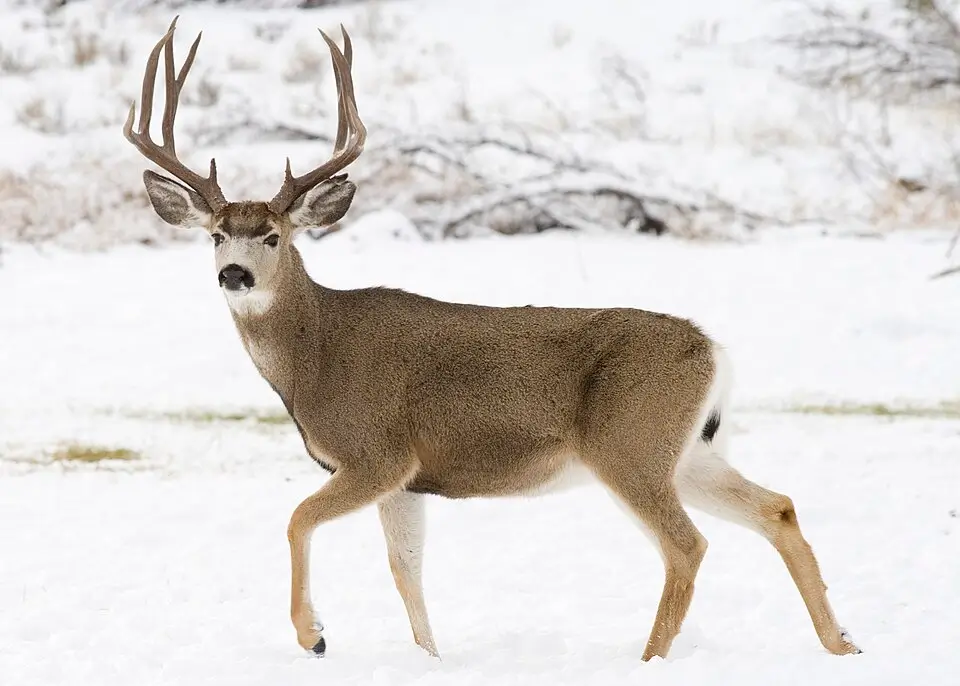
The mule deer is a member of the family Cervidae, which includes all deer, elk, and moose. It is a moderately sized deer, with adults standing between 3 to 3.5 feet tall at the shoulder. Their weight can vary significantly based on subspecies, habitat, and nutrition, but bucks typically range from 150 to over 300 pounds, while does are generally smaller, weighing between 100 to 200 pounds. One of their most distinguishing features is their large ears, which can move independently to pinpoint sounds, providing excellent auditory awareness of their surroundings.
Their coat is another marvel of adaptation. In the summer, mule deer sport a sleek, reddish-brown coat that helps reflect heat. As winter approaches, they molt into a thicker, grayish-brown coat with a dense underfur, providing crucial insulation against the cold. The rump patch is a distinctive white or cream color, and the tail is thin and white with a black tip, which they often flare as a warning signal when alarmed.
The mule deer's antlers are a hallmark of the species, found only on bucks. Each year, bucks shed their antlers in late winter or early spring and begin growing a new set, covered in a soft, blood-rich skin known as velvet. The velvet supplies nutrients and oxygen for rapid antler growth. By late summer, the antlers are fully hardened, and the bucks rub off the velvet on trees and shrubs. A mature buck's antlers are dichotomously branching, meaning they fork evenly as they grow, rather than branching from a single main beam like a whitetail deer. A large, trophy-class buck may have antlers with four or five points on each side, though point count is not always a direct indicator of age or quality.
Their behavior is also highly specialized. The mule deer is famous for its unique bounding gait called "stotting" or "pronking," where all four feet hit the ground simultaneously, propelling the deer forward in a stiff-legged, springy motion. This gait is energy-efficient for traversing rough, uneven terrain and allows them to cover ground quickly while keeping their head up to scan for predators. Their primary senses are their keen hearing and excellent sense of smell, compensating for relatively poor long-distance eyesight.
Habitat & Range
The geographic range of the mule deer is vast, stretching from the coastal islands of Alaska down through British Columbia and across the western United States into northern Mexico. This range encompasses an incredible diversity of ecosystems, which is a testament to their adaptability. They are not creatures of a single habitat type; instead, they utilize a mosaic of landscapes throughout the year, often undertaking seasonal migrations between summer and winter ranges.
In the summer, mule deer are often found at higher elevations in mountainous regions. Here, they inhabit alpine meadows, aspen groves, and coniferous forests, taking advantage of abundant forage and cooler temperatures. As snow begins to fall and food becomes scarce at these elevations, they migrate to lower-elevation winter ranges. These critical winter habitats often include pinyon-juniper woodlands, sagebrush flats, desert scrublands, and riparian corridors along rivers and streams. This migration can cover dozens or even hundreds of miles, and the survival of herds depends heavily on the quality and security of these traditional winter grounds.
The state of Arizona, located in the heart of the Southwest, provides a prime example of this habitat diversity. Arizona's topography ranges from high, forested peaks over 12,000 feet in the San Francisco Mountains to the vast Sonoran Desert lowlands. Within this single state, mule deer can be found navigating the oak woodlands and chaparral of the "sky island" mountain ranges, the pinyon-juniper belts of the Colorado Plateau, and the desert scrub of the Basin and Range province. They are adept at finding food and shelter in these arid environments, browsing on a wide variety of native plants.
Their diet is primarily browse-based, consisting of leaves, twigs, and shoots of woody plants like sagebrush, bitterbrush, mountain mahogany, and various desert shrubs. They also consume forbs (broad-leafed herbaceous plants), grasses, cacti fruits, and seasonal crops like alfalfa when available. This flexible, herbivorous diet allows them to thrive in environments where other large herbivores might struggle.
Hunting Information
The mule deer is a cornerstone of big game hunting in the western United States, deeply woven into the traditions and management practices of the region. Hunting is a critical tool used by state wildlife agencies, such as the Arizona Game and Fish Department, to manage mule deer populations. By regulating harvest through a system of limited permits, agencies aim to keep deer numbers in balance with the available habitat, preventing overgrazing and ensuring healthy herds for the future.
Hunters pursue mule deer in a variety of ways, often dictated by the terrain and season. Spot-and-stalk is a popular and effective method, especially in more open habitats like those found in Arizona's canyon country and desert basins. Hunters use high-quality optics to locate deer from a distance, then carefully plan and execute a stalk, using the landscape for cover. In more forested areas, still-hunting—slowly and quietly moving through likely habitat—is also common.
It is essential for any prospective hunter to understand that specific regulations, including season dates, legal hunting methods, and permit requirements, vary significantly by state, hunting unit (Game Management Unit), and even by species subspecies. The source data for this article does not provide specific season dates or license requirements for Arizona. Therefore, anyone interested in hunting mule deer in Arizona must consult the most recent annual hunting regulations published by the Arizona Game and Fish Department. These regulations are the ultimate authority and provide essential information on application deadlines for limited-draw hunts, season dates, legal weapons, bag limits, and specific rules for each GMU. Ethical hunters make it their duty to know and follow these regulations precisely to ensure the long-term sustainability of the species.
Conservation
The history of mule deer populations is one of significant fluctuations, shaped by human activity, habitat changes, and natural cycles. In the early 20th century, unregulated market hunting and predator control led to a drastic decline in numbers. The conservation movement that followed, fueled by the work of hunters and organizations, established the North American Model of Wildlife Conservation, which holds that wildlife is held in the public trust and managed by science. This model has been instrumental in the recovery of mule deer and other species.
Today, conservation challenges remain. Habitat loss and fragmentation are perhaps the most significant threats. Urban expansion, energy development, agricultural conversion, and the construction of roads and fences can disrupt traditional migration routes, reduce available winter range, and isolate herds. Another growing concern is the encroachment of invasive plant species, which can outcompete the native forbs and shrubs that mule deer rely on.
Chronic Wasting Disease (CWD), a fatal neurological disease affecting deer, elk, and moose, poses a serious and increasing threat to mule deer populations across their range. Wildlife agencies actively monitor for CWD through testing of harvested and found-dead animals and implement management strategies to slow its spread.
Conservation efforts are multifaceted. They include habitat improvement projects like restoring springs, planting native browse, and removing invasive species. In Arizona and other states, wildlife agencies work to secure critical migration corridors and winter ranges through land acquisition or conservation easements with private landowners. Scientific research using GPS collars is providing unprecedented data on migration patterns, habitat use, and survival rates, allowing for more informed management decisions.
The future of the mule deer depends on continued science-based management, habitat conservation, and the ethical practices of outdoor enthusiasts. By understanding their biology and respecting their habitat, humans can ensure that the sight of a mule deer bounding across a ridge at sunset remains a defining feature of the western landscape for generations to come.
Frequently Asked Questions
What is the scientific name for the Mule deer?
The scientific name for the Mule deer is *Odocoileus hemionus*.
Why is it called a Mule deer?
It is called a Mule deer due to its characteristically large, mule-like ears.
What is the unique gait of a Mule deer called?
The unique, springy bounding gait of a Mule deer is called 'stotting' or 'pronking.'
What are the main conservation challenges for Mule deer?
The main conservation challenges include habitat loss and fragmentation, the spread of Chronic Wasting Disease (CWD), and the encroachment of invasive plant species that reduce their native food sources.
Where can I find official regulations for hunting Mule deer in Arizona?
You must consult the most recent annual hunting regulations published by the Arizona Game and Fish Department. They provide the only authoritative information on season dates, permits, and legal methods for each specific Game Management Unit.