The Mallard: A Comprehensive Guide to the World's Most Recognizable Duck
Introduction
The Mallard (Anas platyrhynchos) is, without a doubt, the most recognized and widespread duck on the planet. For hunters, birdwatchers, and casual observers alike, the sight of a male Mallard’s iridescent green head cutting through the morning mist is an iconic symbol of wetlands across the Northern Hemisphere. This adaptability has allowed it to thrive from the Arctic tundra to city parks, making it a cornerstone species in both ecosystems and outdoor traditions. Its significance extends beyond the wild; the Mallard is the ancestor of nearly all domestic duck breeds, cementing its place in human agricultural history. This article delves into the fascinating biology, broad habitat range, and the respectful pursuit of this remarkable bird, while also exploring the conservation efforts that ensure its continued abundance.
Biological Traits
The Mallard is a medium-sized dabbling duck, a group that feeds by tipping forward in the water to graze on submerged vegetation rather than diving. The species exhibits pronounced sexual dimorphism, meaning males (drakes) and females (hens) look distinctly different, a trait most evident during the breeding season.
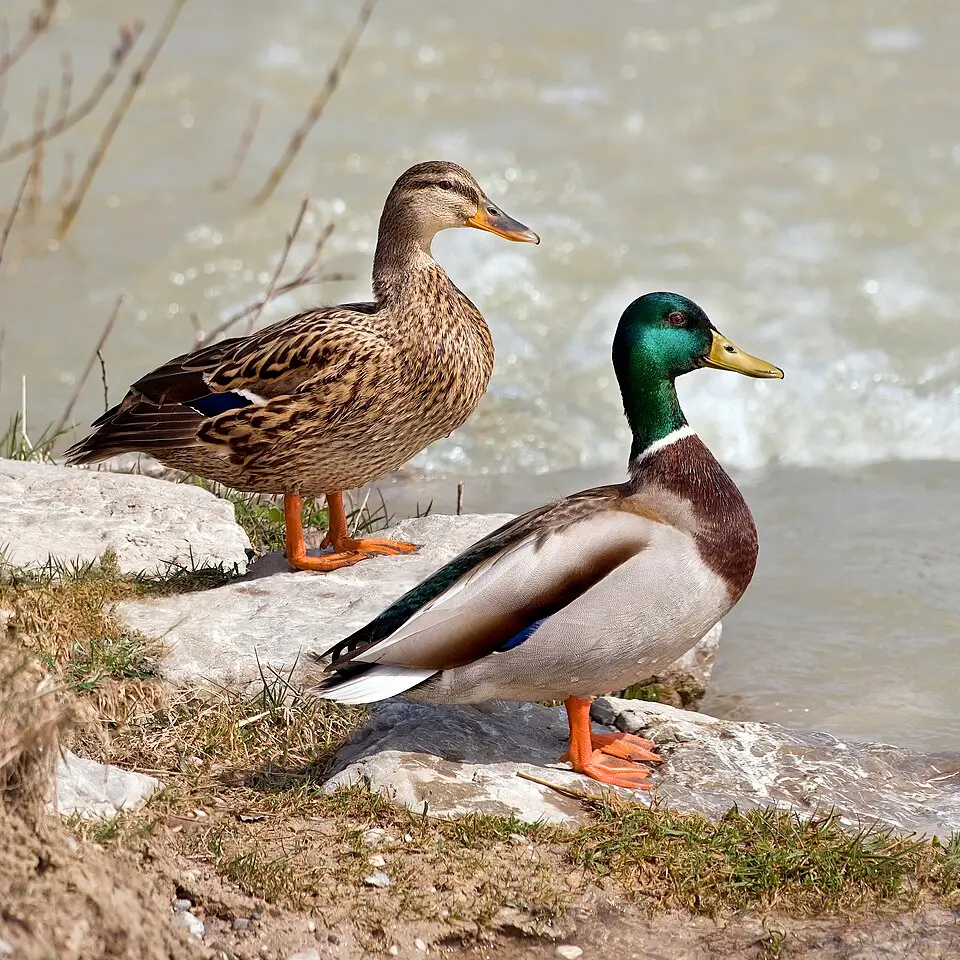
The drake in breeding plumage is unmistakable. His head and neck are a shimmering, bottle-green that can appear almost black in certain lights, set off by a brilliant white neck ring. The breast is a rich chestnut-brown, leading into a gray body. The tail features distinctive curly black feathers, known as drake feathers or sex feathers. His bill is a dull yellow, and his legs and feet are a vibrant orange. In contrast, the female has a more cryptic, mottled brown plumage, an adaptation that provides excellent camouflage while nesting. Her bill is often orange-and-brown. Both sexes display a distinct speculum—a patch of iridescent blue-violet bordered by white on the trailing edge of their wings—which is a key field mark in flight.
Mallards are known for their vocalizations. The classic "quack" is primarily the sound of the female, used to communicate with her brood and other ducks. The drake’s call is softer, a quieter, rasping "raeb." Their diet is omnivorous and highly adaptable, consisting of seeds, stems, and roots of aquatic plants, grains from agricultural fields, insects, mollusks, and crustaceans. As dabblers, they are often seen upending in shallow water, their tails pointed skyward.
The breeding biology of Mallards is equally fascinating. Courtship begins in the fall, with elaborate displays and pair bonds forming for the season. Drakes perform head-bobbing and grunt-whistle displays to attract hens. After mating, the hen selects a nesting site, which can be remarkably varied—from traditional locations in dense marsh vegetation to unconventional spots in flowerbeds, on floating mats of vegetation, or even on building rooftops. She constructs a shallow bowl nest, lining it with down feathers plucked from her breast. A typical clutch consists of 8 to 13 eggs, which the hen incubates alone for about 27 to 28 days. Upon hatching, the precocial ducklings are able to walk, swim, and feed themselves almost immediately, though they remain under the mother's protective care. A unique aspect of Mallard biology is their propensity for hybridization with other duck species, which can sometimes complicate identification in the field.
Habitat & Range
The Mallard’s range is circumpolar, covering North America, Europe, Asia, and parts of North Africa. It has also been introduced to other regions, including South Africa, Australia, New Zealand, and South America. This incredible distribution is a testament to its adaptability. Mallards are not specialists; they are masters of utilizing a wide array of freshwater habitats.
Their preferred environments include marshes, swamps, ponds, lakes, slow-moving rivers, and flooded agricultural fields. They require open water for feeding and loafing, adjacent emergent vegetation like cattails and reeds for nesting cover and predator avoidance, and upland areas with grasses or crops for additional foraging. This adaptability allows them to exploit both pristine wilderness wetlands and human-altered landscapes, such as city parks, farm ponds, and reservoirs.
In the context of Arizona, while specific habitat data is not provided in the source, the state’s diverse geography offers suitable Mallard environments. Riparian corridors along rivers like the Colorado, Salt, and Gila, as well as numerous reservoirs, stock ponds, and managed wetlands, provide essential water resources in an arid landscape. These areas serve as critical stopover points for migrating Mallards and can support resident populations where permanent water and food sources exist. The species’ generalist nature means it can be found wherever these basic habitat requirements are met, from high-elevation lakes to desert oases.
Hunting Information
The Mallard is arguably the most popular and sought-after waterfowl species in North America. Hunting this duck is a time-honored tradition that requires skill, knowledge, and a deep respect for the resource. Successful hunting revolves around understanding the bird’s daily patterns—feeding in harvested grain fields at dawn, loafing on open water during midday, and returning to feed in the evening. Decoying and calling are the primary methods. Hunters use spreads of decoys to mimic a flock of feeding or resting ducks on the water, and they employ duck calls to replicate the hen’s quack and other social sounds to attract passing birds.
Regarding the state context provided for Arizona, the source data specifies that official hunting information is not available. Therefore, no specific season dates, license requirements, bag limits, or designated hunting zones can be mentioned. It is imperative for any prospective hunter to understand that waterfowl hunting is highly regulated to ensure sustainable populations. Regulations are set annually by state wildlife agencies in coordination with federal frameworks from the U.S. Fish and Wildlife Service.
For accurate, up-to-date, and legal information concerning waterfowl hunting in Arizona, individuals must consult the official sources. The Arizona Game and Fish Department (AZGFD) is the definitive authority. Their website and annual hunting regulations proclamation provide all necessary details, including license requirements, season dates, shooting hours, bag and possession limits, approved hunting methods, and area-specific rules. Compliance with these regulations is not only a legal obligation but a fundamental ethical practice for the conservation-minded hunter.
Conservation
The Mallard’s story is, in many ways, a conservation success. Historically, unregulated market hunting and widespread wetland drainage in the 19th and early 20th centuries severely impacted waterfowl populations. The advent of the Migratory Bird Treaty Act (MBTA) of 1918 and the subsequent development of federal and state wildlife management agencies established a framework for protection. Furthermore, the North American Waterfowl Management Plan (NAWMP), initiated in 1986, fostered international cooperation to restore and protect wetland habitats through partnerships and funding.
Today, the Mallard is managed as a key species under these frameworks. Population surveys, such as the annual Waterfowl Breeding Population and Habitat Survey, provide critical data for setting sustainable harvest regulations. Habitat conservation efforts, including the protection of breeding grounds in the Prairie Pothole Region and the restoration of migration corridors, directly benefit Mallards and countless other species.
Hunters play a vital and positive role in this conservation model. Through the purchase of federal Duck Stamps and state hunting licenses, and through excise taxes on firearms and ammunition via the Pittman-Robertson Act, hunters provide the primary funding for wildlife management, habitat acquisition, and research. This user-pay, public-benefit system ensures that the pursuit of Mallards directly contributes to the health of the ecosystems they inhabit. While the global population of Mallards is large and stable, ongoing challenges such as habitat loss, climate change, and water pollution require continued vigilance and the sustained commitment of conservationists and hunters alike.
Frequently Asked Questions
What is the scientific name for the Mallard?
The scientific name for the Mallard is *Anas platyrhynchos*.
How can you tell a male Mallard from a female?
Male Mallards (drakes) have a distinctive bright green head, a white neck ring, and a chestnut-brown breast. Female Mallards (hens) are mottled brown all over for camouflage. Both sexes share the blue-violet speculum (wing patch) bordered in white.
Where do Mallard ducks live?
Mallards have a vast circumpolar range, living across North America, Europe, and Asia. They inhabit freshwater environments like marshes, ponds, lakes, rivers, and flooded fields. They are highly adaptable and can also be found in urban parks and farm ponds.
Can you hunt Mallards in Arizona?
Yes, Mallards are present in Arizona and can be legally hunted there, but specific rules apply. For accurate, official information on season dates, license requirements, and hunting zones, you must consult the current year's regulations from the Arizona Game and Fish Department (AZGFD). Their website is the definitive source for all waterfowl hunting rules in the state.
Why is the Mallard so important to conservation?
Mallards are a flagship species for wetland conservation. Hunters contribute directly to their conservation through license fees and taxes, funding habitat protection and management. The species’ success demonstrates the effectiveness of regulated hunting and international conservation agreements like the Migratory Bird Treaty Act.