The Eastern Gray Squirrel: A Familiar Acrobat of the Trees
The Eastern gray squirrel, known scientifically as Sciurus carolinensis, is one of the most recognizable and widespread mammals in North America. Its adaptability and charismatic behavior have allowed it to thrive in a variety of environments, from dense hardwood forests to the heart of bustling cities. While its natural range is primarily in the eastern and midwestern United States, introductions and expansions have brought it to other regions, including parts of the Southwest. This article explores the biology, habitat, and general status of the Eastern gray squirrel, with a particular focus on its presence and the context of wildlife management in a state like Arizona.
Introduction
For many people, the sight of a gray squirrel bounding across a lawn or spiraling up a tree trunk is a common and often delightful occurrence. This species is a member of the family Sciuridae, which includes all squirrels. Its success is a testament to its intelligence, memory, and physical prowess. The Eastern gray squirrel plays a significant ecological role as a seed disperser, inadvertently planting countless trees by forgetting some of the nuts and acorns it buries. Its presence in an ecosystem influences forest composition and provides a prey base for various predators. Understanding this animal is key to appreciating the intricate connections within its environment.
Biological Traits
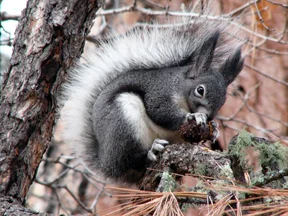
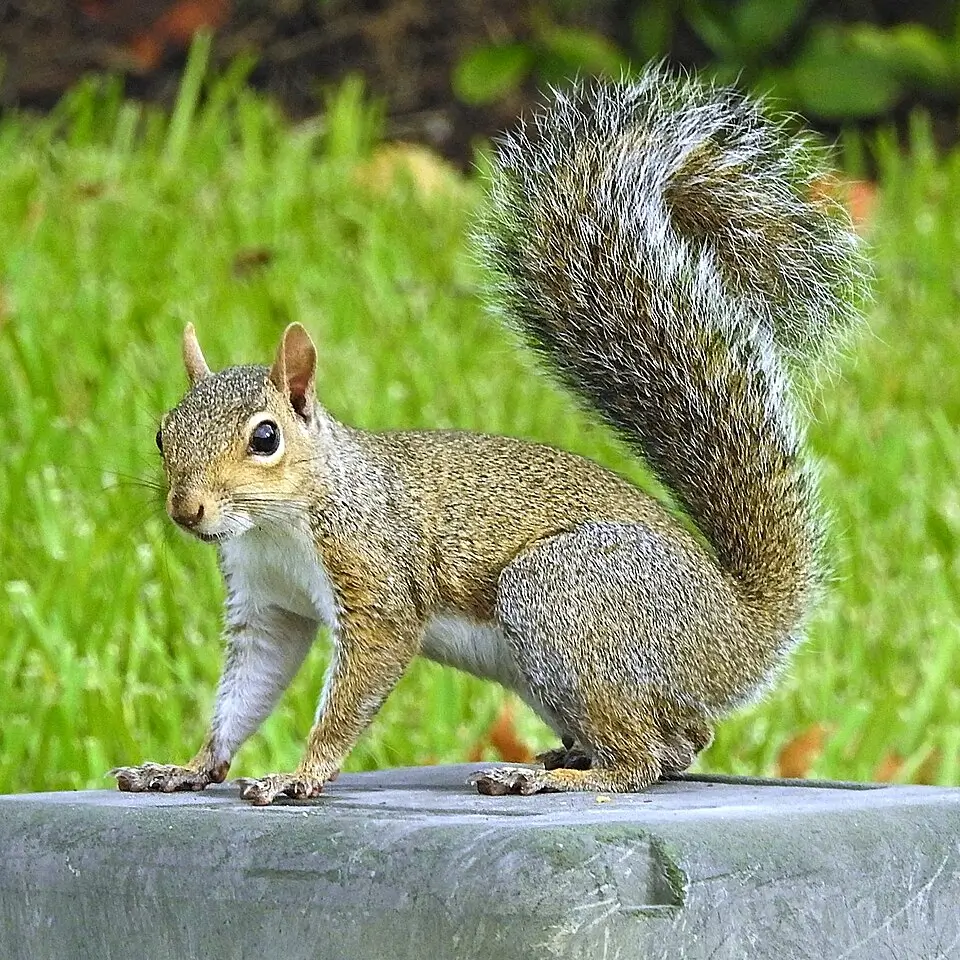
The Eastern gray squirrel is a medium-sized rodent with a body length that typically ranges from 9 to 12 inches, not including its long, bushy tail, which can add another 8 to 10 inches. Adults generally weigh between 1 and 1.5 pounds. As its common name suggests, its fur is predominantly gray, though it can exhibit shades of brown, especially on the back and sides. Its underside is usually lighter, often white or pale gray. A notable characteristic is its large, fluffy tail, which serves multiple purposes: it aids in balance when leaping between branches, acts as a blanket or umbrella, and is used for communication through various gestures.
These squirrels are highly active during the day, particularly in the early morning and late afternoon. They are renowned for their agility, capable of running at speeds up to 20 miles per hour and making incredible leaps of up to 8 feet horizontally. Their sharp, curved claws are perfectly designed for gripping bark, allowing them to descend a tree head-first—a maneuver few other mammals can perform. Their diet is primarily vegetarian, consisting of acorns, walnuts, hickory nuts, seeds, and fruit. However, they are opportunistic and will also consume fungi, insects, bird eggs, and even small vertebrates when the opportunity arises.
One of the most fascinating aspects of gray squirrel biology is their sophisticated food-caching behavior. They are scatter-hoarders, meaning they hide thousands of individual food items in numerous locations throughout their territory each autumn. This requires an exceptional spatial memory, which studies have shown they possess, allowing them to recover a significant portion of their hidden stores months later. This behavior is crucial not only for their winter survival but also for forest regeneration, as unrecovered seeds germinate and grow into new trees.
Habitat and Range
The native range of the Eastern gray squirrel extends throughout the eastern United States, from the Great Lakes region south to Florida and west to the Mississippi River. It has also been introduced to parts of the Pacific Northwest and to various locations in Europe. Its preferred habitat is mature deciduous and mixed forests, particularly those dominated by oak, hickory, walnut, and maple trees, which provide a reliable food supply. They favor forests with a dense understory for cover and plenty of large trees for nesting.
However, the gray squirrel's defining trait is its remarkable adaptability. It has successfully colonized urban and suburban parks, college campuses, and residential neighborhoods, where it often finds an abundance of ornamental trees, bird feeders, and less predatory pressure than in wild forests. In these human-dominated landscapes, populations can become quite dense.
Regarding Arizona, the Eastern gray squirrel is not native to the state. Arizona's ecosystem is primarily characterized by desert, grassland, and mountainous coniferous forests, which do not constitute ideal habitat for this species. Any populations present would be the result of deliberate or accidental human introductions. While the exact status of such introductions within Arizona is not specified in the available data, the state's wildlife management agency, the Arizona Game and Fish Department, would oversee any such non-native species. The presence of a non-native species like the Eastern gray squirrel can potentially create ecological challenges by competing with native species for resources.
Hunting Information
In states where the Eastern gray squirrel is native and abundant, it has a long-standing tradition as a small game animal. Hunting seasons are typically established to manage populations sustainably while providing recreational opportunities. General principles for hunting this species include the use of small-caliber rifles, shotguns, or air rifles, and hunting often involves still-hunting or spot-and-stalk techniques in wooded areas.
For the specific context of Arizona, the provided source data states that official hunting information is not available. This aligns with the fact that the Eastern gray squirrel is not a native game species in the state. Wildlife regulations in Arizona are meticulously crafted for native species and for managing introduced species that have become established. Any hunting of non-native animals like the Eastern gray squirrel, if permitted at all, would be governed by specific rules from the Arizona Game and Fish Department to prevent ecological disruption.
Prospective hunters must always consult the most current year's official regulations from the Arizona Game and Fish Department for accurate and legal information regarding seasons, licensing, bag limits, and legal methods for any wildlife species. Ethical hunting practices, including obtaining proper landowner permission and making clean, humane harvests, are paramount regardless of the species or location.
Conservation
From a conservation perspective, the Eastern gray squirrel is classified as a species of "Least Concern" by the International Union for Conservation of Nature (IUCN). Its population is considered stable and, in many areas, thriving due to its adaptability. In its native range, it faces natural predation from hawks, owls, foxes, weasels, and snakes.
However, the story is different in some regions where it has been introduced. In parts of the western United States and Europe, the Eastern gray squirrel can outcompete native squirrel species, such as the Western gray squirrel or the Eurasian red squirrel, for food and habitat. It can also be a carrier of diseases, like squirrelpox, which can be fatal to other species but which the gray squirrel itself often tolerates. For these reasons, wildlife managers in areas with introduced populations may implement control measures to protect native biodiversity.
In its native range and in areas where it is well-established, the primary focus is on maintaining healthy populations through regulated hunting and habitat conservation. Its role as an agent of reforestation and as a prey species makes it an integral component of forest ecosystems. In a state like Arizona, conservation efforts would likely focus on monitoring any non-native populations to assess their impact on local ecosystems and native wildlife.
In conclusion, the Eastern gray squirrel is a dynamic and resilient species, emblematic of adaptability in the animal kingdom. Whether viewed as a beloved backyard visitor, a challenging game animal, or a potential ecological concern, its presence continues to spark interest and interaction with humans across the varied landscapes of North America.
Frequently Asked Questions
Can you hunt Eastern gray squirrel in Arizona?
The Eastern gray squirrel is not a native species in Arizona, and official hunting information for it is not available. Any hunting activity would be governed by specific rules from the Arizona Game and Fish Department, which you must consult for the most current regulations.
What is the scientific name for the Eastern gray squirrel?
The scientific name for the Eastern gray squirrel is Sciurus carolinensis.
What is a key behavior of Eastern gray squirrels that helps forests?
They are scatter-hoarders, burying thousands of nuts and acorns each autumn. Many unrecovered seeds germinate, making the squirrels important agents of reforestation.
Why is the Eastern gray squirrel considered a conservation concern in some areas?
In regions where it has been introduced, such as parts of the western U.S. and Europe, it can outcompete native squirrel species for resources and may transmit diseases, potentially harming local biodiversity.