The Dusky Grouse: A Comprehensive Guide to the Mountain Bird
Introduction
Among the rugged peaks and dense coniferous forests of North America's mountainous regions lives a remarkable bird perfectly adapted to life at high elevations: the Dusky Grouse (Dendragapus obscurus). Formerly known in many areas as the Blue Grouse, this large, robust member of the grouse family is a prized sight for birdwatchers and a respected challenge for upland hunters. Its presence is often announced not by sight, but by the low, resonant hooting of an amorous male in the spring or the sudden, explosive flush of wings that can startle even the most experienced outdoors enthusiast. This article delves into the biology, habitat, and unique characteristics of the Dusky Grouse, providing a foundational understanding of this fascinating species that thrives in some of the continent's most breathtaking and demanding environments.
Biological Traits
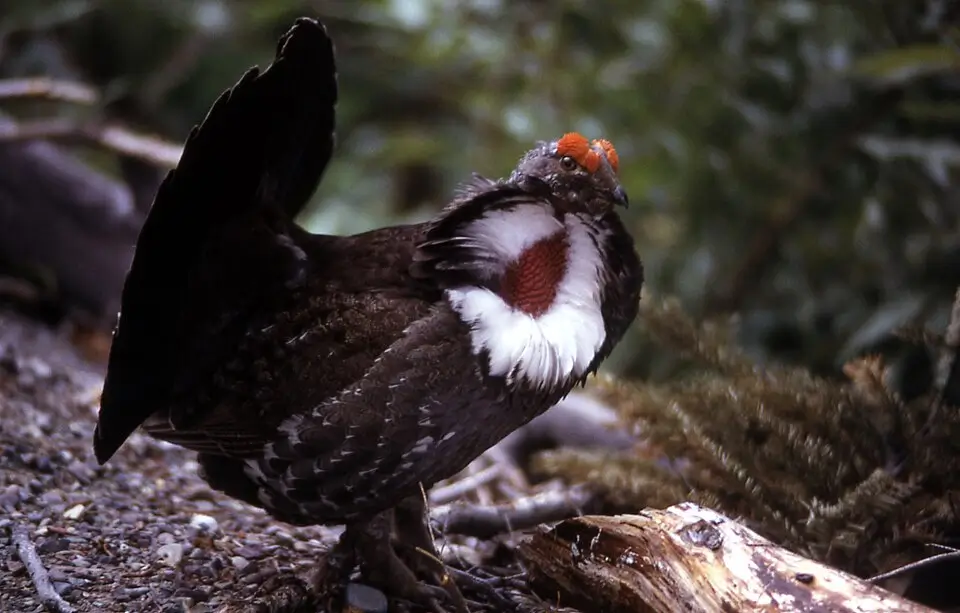
The Dusky Grouse is a substantial bird, typically weighing between 2.5 to 3.5 pounds (1.1 to 1.6 kg), making it one of the larger grouse species in North America. Its appearance is characterized by a cryptic and complex plumage that provides excellent camouflage against the lichen-covered bark and shadowed forest floors of its home.
Adult males are predominantly dark gray or sooty-colored, with a noticeable yellow or purplish-red comb (fleshy patch) over each eye that becomes more vibrant during the breeding season. Their tail is long and squared, tipped with a distinct gray band. During courtship, males perform a captivating display, strutting and fanning their tail while emitting deep, owl-like hoots that echo through the forest. They also reveal striking white feathers on their rump and under their tail during this ritual.
Females are generally smaller and more cryptically colored, featuring intricate patterns of gray, brown, and white barring that provide superb camouflage while nesting on the ground. Juvenile birds resemble females in their mottled appearance.
A key physiological adaptation of the Dusky Grouse is its specialized digestive system. Like other grouse, it possesses an enlarged crop and gizzard, allowing it to consume and break down tough, fibrous plant material. During the harsh winter months, when its diet shifts almost entirely to the needles of conifer trees, the grouse's cecum (a part of the intestine) enlarges significantly. This houses symbiotic bacteria that help ferment and extract nutrients from this challenging food source, a remarkable adaptation that allows it to survive in high-altitude and high-latitude winter habitats where other food is scarce.
Their diet is highly seasonal. In the spring and summer, they forage on the ground, consuming a variety of green plants, flowers, buds, and insects. The protein from insects is especially important for growing chicks. As autumn arrives and snow begins to cover the ground, they transition to a diet of berries, seeds, and leaves. By winter, they become almost exclusively arboreal, spending much of their time in coniferous trees feeding on needles.
Habitat & Range
The Dusky Grouse is fundamentally a bird of the mountains. Its range stretches in a broad band along the western cordillera of North America, from southern Alaska and British Columbia through the mountainous regions of the western United States, including Washington, Oregon, Idaho, Montana, Wyoming, Colorado, Utah, Nevada, and into parts of New Mexico and Arizona.
A defining feature of the Dusky Grouse's life history is its seasonal altitudinal migration. This behavior, which differs from the long-distance migrations of waterfowl, is a critical adaptation to mountain weather. During the spring and summer breeding season, they inhabit higher-elevation coniferous and mixed forests, often near meadows and clearings where food is abundant and hens can nest.
As autumn progresses and snow begins to accumulate at higher elevations, Dusky Grouse undertake a deliberate descent to lower elevations. They may move down several thousand feet into denser, more mature coniferous forests, sometimes referred to as "wintering grounds" or "winter concentration areas." Here, the snowpack is less severe, and their staple food of Douglas-fir, spruce, fir, or pine needles is readily available. This predictable seasonal movement is a crucial element for understanding the species' ecology.
Their preferred habitat is structurally diverse. They thrive in landscapes that offer a mosaic of dense forest cover for roosting and protection, interspersed with open areas like parks, meadows, and old burns for feeding. The edges between these zones are particularly valuable. The presence of downed logs, rocky outcrops, and shrubby undergrowth provides essential cover for nesting hens and vulnerable chicks. The specific tree species present depend on the geographic region, but conifers like Douglas-fir, Engelmann spruce, subalpine fir, and various pines are consistently important components of their habitat.
Hunting Information
Please note: The following section contains general, well-known information about pursuing Dusky Grouse. It is critical for hunters to always consult the current, official regulations, season dates, and bag limits published by the wildlife management agency of the specific state or province they intend to hunt before participating in any hunting activity.
Hunting Dusky Grouse is a cherished tradition for many upland bird enthusiasts, offering a challenging and rewarding experience in spectacular mountain settings. Often considered a "classic" wingshooting pursuit, it typically involves walking through steep, forested terrain with a well-trained dog to locate and flush birds.
Successful grouse hunting requires understanding the bird's seasonal patterns. In the early fall, just after the season opens, birds may still be at higher elevations and can be found in a variety of habitats. As the season progresses and weather forces them to migrate down, hunters often focus their efforts on south-facing slopes and lower-elevation conifer stands where the birds have concentrated.
A good hunting dog, particularly breeds like setters, pointers, or versatile flushing dogs, is invaluable. Their keen noses can detect the well-camouflaged birds long before a human eye can, allowing for a planned approach and a safer shot. The explosive flush of a Dusky Grouse from dense cover is a hallmark of the hunt, requiring quick but careful shooting.
The typical shotgun for grouse is a light, fast-handling model in gauges like 12, 16, or 20, loaded with appropriate shot sizes (commonly #6 or #7.5). Because shots are often taken in tight quarters around trees and brush, improved cylinder or modified chokes are frequently chosen to provide a wider, more forgiving pattern.
The quality of the table fare is another major draw. Dusky Grouse breast meat is widely regarded as delicious, with a mild, slightly nutty flavor that is highly prized. The bird's diet of greens, berries, and conifer needles contributes to its excellent taste.
Conservation
The Dusky Grouse is currently classified as a species of "Least Concern" by the International Union for Conservation of Nature (IUCN). Its population is considered stable across most of its extensive range. This stability is largely due to the vast, remote, and often rugged nature of its mountain habitat, which has limited significant human encroachment.
However, like all wildlife, it faces a set of ongoing conservation challenges. Habitat loss and fragmentation due to residential development, energy exploration, and changes in forest management practices can impact local populations. The alteration of natural fire regimes can affect the mosaic of forest and meadow habitats they rely on. Furthermore, as a game species, sustainable harvest management through science-based regulations is essential to ensure healthy populations for the future.
Climate change presents a longer-term, broad-scale concern. Shifts in temperature and precipitation patterns could alter the composition of mountain forests, affect the timing of snowmelt and plant growth, and potentially disrupt the delicate balance of the grouse's seasonal altitudinal migration. Conservation efforts focus on maintaining large, connected tracts of suitable habitat, conducting population surveys, and funding research to better understand their ecology and responses to environmental changes. The collaboration between state wildlife agencies, federal land managers, conservation organizations, and sportsmen's groups is vital for the continued health of the Dusky Grouse and the mountain ecosystems it inhabits.
Frequently Asked Questions
What is the difference between a Dusky Grouse and a Sooty Grouse?
The Dusky Grouse and Sooty Grouse were formerly considered a single species called the Blue Grouse. They are now recognized as two distinct species: the Dusky Grouse (Dendragapus obscurus) found in the interior mountains, and the Sooty Grouse (Dendragapus fuliginosus) found along the Pacific Coast. Key differences include subtle variations in plumage, vocalizations, and habitat preference.
What is the best time of year to see or hear a Dusky Grouse?
The best time to hear the male's distinctive low hooting is during the spring breeding season, from April to June. They are most easily observed during the fall hunting season when they are active and before deep snows force them into dense winter cover.
What do Dusky Grouse eat in the winter?
During winter, Dusky Grouse depend almost exclusively on the needles of conifer trees, such as Douglas-fir, spruce, and fir. Their digestive system undergoes a seasonal change to help process this tough, fibrous diet.
Why do Dusky Grouse migrate up and down mountains?
This is a seasonal altitudinal migration driven by weather and food availability. They move to higher elevations in spring and summer for breeding and abundant ground vegetation, then descend to lower, denser forests in fall and winter to escape deep snow and access their staple conifer needle diet.
Are Dusky Grouse good to eat?
Yes, Dusky Grouse are considered excellent table fare. Their breast meat is known for being tender and mild-flavored, often described as superior to many other upland game birds, partly due to their varied diet of greens and berries.