The Band-tailed Pigeon: A Comprehensive Guide to North America's Native Pigeon
Introduction
Among the diverse avian inhabitants of North America's western woodlands, the Band-tailed Pigeon (Patagioenas fasciata) holds a distinctive place. Often overshadowed by its abundant and introduced relative, the Rock Pigeon (or "city pigeon"), the Band-tailed Pigeon is a native species with a deep ecological role in its forested habitats. This large, swift-flying bird is a familiar sight to hikers, birdwatchers, and hunters across the mountain ranges from British Columbia to Central America. Its presence is often announced by its unique, owl-like cooing, a sound that echoes through the coniferous and mixed woodlands it calls home. Understanding this bird involves exploring its biology, its critical habitat needs, its history with humans, and the conservation challenges it faces.
Biological Traits
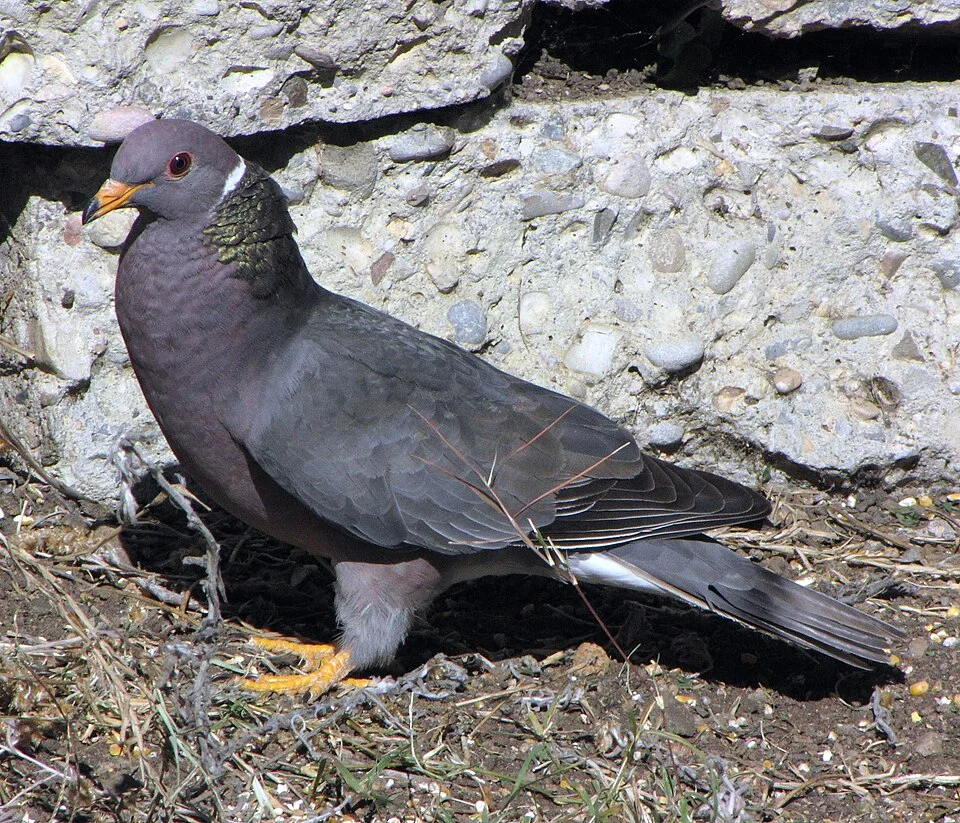
The Band-tailed Pigeon is the largest pigeon species native to North America. Adults typically measure between 13 to 16 inches in length and possess a wingspan that can reach nearly two feet. Their most distinguishing feature, which gives them their name, is the pale gray band tipped with black that crosses their otherwise dark, iridescent tail. The body plumage is a soft gray, often with a pinkish or purplish gloss on the neck and breast that shimmers in sunlight. Another key identifier is the yellow-tipped bill, which is relatively thin for a pigeon, and a white crescent on the back of the neck. Males and females look similar, though males may display slightly brighter iridescence.
From a taxonomic perspective, the Band-tailed Pigeon belongs to the family Columbidae, which encompasses pigeons and doves worldwide. Its scientific name, Patagioenas fasciata, reflects its classification. "Patagioenas" is a genus of New World pigeons, and "fasciata" is Latin for "banded," a direct reference to its tail pattern. Several subspecies are recognized throughout its range, showing slight variations in size and plumage darkness.
Band-tailed Pigeons are primarily granivores (seed-eaters), with a strong preference for nuts and large seeds. Their diet is highly seasonal and depends on the mast crop of various tree species. They are particularly fond of acorns, pine nuts (especially from Ponderosa pines and other species), and the fruits of madrone, toyon, and manzanita. This dependence on specific tree nuts makes them a vital agent in seed dispersal for these forest trees. Unlike many smaller birds, they can swallow large acorns whole, later regurgitating the shell. They also consume berries, grains, and occasionally buds and shoots. They forage in the canopy and on the ground, often in flocks.
Reproduction in Band-tailed Pigeons is characterized by a simple, sparsely constructed nest. Breeding typically occurs from spring through summer. The nest is a loose platform of twigs, placed on a horizontal branch of a conifer or large deciduous tree, usually 15 to 70 feet above the ground. The female lays one, rarely two, white eggs. Both parents share in the incubation duties, which last about 18 days. The young pigeon, known as a squab, is fed "pigeon milk"—a protein- and fat-rich secretion produced by both parents in their crops. This highly nutritious substance allows the squab to grow rapidly. The squab will fledge in about 25 to 30 days. Band-tailed Pigeons may raise one or two broods per year, depending on the availability of food resources.
Communication within flocks involves a variety of vocalizations. The most common call is a deep, resonant, and somewhat mournful cooing, often described as sounding like "whoo-OO-oo," which can be mistaken for an owl's call. They also produce grunts and low growls during courtship or territorial interactions.
Habitat & Range
The Band-tailed Pigeon's range extends from the Pacific coast of North America down through the mountainous regions of Central America to parts of South America. In the United States, their habitat is largely confined to the western mountains and coastal forests, ranging from southeastern Alaska and British Columbia, through Washington, Oregon, and California, and into the Rocky Mountain states of Idaho, Montana, Colorado, Utah, Arizona, and New Mexico. Their range also extends into Mexico and further south.
Their habitat preferences are strongly tied to forests that provide their primary food sources. They are most abundant in mature, mixed coniferous and deciduous woodlands, particularly those containing:
* Oak woodlands and hardwood forests for acorn production.
* Pine forests, especially Ponderosa, Jeffrey, and Coulter pines for pine nuts.
* Douglas-fir and other conifer stands for nesting cover.
* Riparian corridors with fruit-bearing trees like madrone.
These pigeons often undertake seasonal elevational migrations to track food availability. In the fall and winter, they may move from higher-elevation nesting areas to lower-elevation woodlands where acorns and other nuts are more plentiful. This nomadic tendency in response to fluctuating food resources is a key aspect of their ecology. They require reliable sources of fresh water, frequently visiting springs, seeps, and streams.
The health of Band-tailed Pigeon populations is directly linked to the health and continuity of these forest ecosystems. Fragmentation of woodlands due to development or logging can reduce available habitat and food resources, isolating populations.
Hunting Information
The Band-tailed Pigeon is a legally hunted game bird in several western states. Its history as a game bird dates back to early settlers and indigenous peoples. However, due to their specific habitat needs and sensitivity to overharvest, their management as a game species is carefully regulated.
It is critically important for hunters to note that no official hunting season dates, bag limits, or specific regulations are available from the provided primary source data. Regulations for Band-tailed Pigeons can be complex, varying significantly by state and even by management unit within a state. They often differ from the regulations for mourning doves, with which they are sometimes co-hunted.
General principles, based on historical practice, include:
* Seasons: Hunting seasons are typically set in the fall, often coinciding with the birds' congregation in areas with abundant food sources like oak groves.
* Licensing: A state hunting license is required. Additionally, many states require hunters to obtain a HIP (Harvest Information Program) certification, and some may require a special upland game bird validation.
* Methods: Hunting is most commonly done by pass-shooting near known flyways between roosting and feeding areas or by field hunting over bait, where legal. Decoys can be effective.
* Bag Limits: Historically, bag limits have been relatively conservative, often set at 2 to 10 birds per day, to prevent overharvest. Possession limits are also established.
* Identification: Positive identification is paramount. Hunters must be able to distinguish Band-tailed Pigeons from other protected species, such as White-winged Doves (where not in season) or the endangered Mourning Dove subspecies in some areas. The white neck crescent and banded tail are the key field marks.
Given the variability and importance of accurate information, anyone interested in hunting Band-tailed Pigeons must consult the current year's official hunting regulations published by the wildlife agency of the specific state they plan to hunt in (e.g., California Department of Fish and Wildlife, Oregon Department of Fish and Wildlife, etc.). These publications provide the only authoritative source for exact season dates, bag limits, and legal methods.
Conservation
The conservation status of the Band-tailed Pigeon is a story of concern and proactive management. While the species is not currently listed as endangered or threatened at the federal level, its population has experienced significant long-term declines. The North American Breeding Bird Survey data suggests a substantial decrease in their numbers since the 1960s.
The primary threats to Band-tailed Pigeons include:
1. Habitat Loss and Degradation: The clearing of mature forests for logging, agriculture, and urban development reduces the availability of both nesting sites and critical food resources like acorns.
2. Food Source Variability: As a species dependent on mast crops (acorns, nuts), their populations are naturally influenced by the boom-and-bust cycles of these trees, which are themselves affected by drought and climate change.
3. Disease: A significant and recurring threat is avian trichomoniasis, a parasitic disease caused by Trichomonas gallinae. This disease can spread rapidly at crowded watering or feeding sites, such as those created by artificial feeding, leading to substantial mortality events.
4. Disturbance: Human recreational activities in forested areas can disrupt nesting and feeding behaviors.
Conservation efforts are multifaceted. State wildlife agencies closely monitor population trends through annual surveys like the Breeding Bird Survey and the Christmas Bird Count. This data informs the establishment of regulated hunting seasons designed to be sustainable. Habitat conservation projects aim to protect and restore mature forest ecosystems. Public education campaigns often discourage the feeding of wild birds, which can concentrate pigeons and facilitate the spread of trichomoniasis.
For birdwatchers and the general public, supporting conservation can involve maintaining natural habitats, avoiding the use of rodenticides that can poison birds through the food chain, and providing clean, native vegetation for foraging rather than artificial feeders. The continued health of the Band-tailed Pigeon is a good indicator of the overall health of western North America's forest ecosystems.
Frequently Asked Questions
What is the main distinguishing feature of the Band-tailed Pigeon?
The most distinguishing feature is the pale gray band tipped with black that crosses its dark tail, which is how it gets its common name. It also has a yellow-tipped bill and a white crescent on the back of its neck.
What does the Band-tailed Pigeon primarily eat?
It is primarily a granivore, with a strong preference for nuts and large seeds, especially acorns, pine nuts, and the fruits of trees like madrone and toyon. This diet makes it an important seed disperser.
Where do Band-tailed Pigeons live?
Their range spans from British Columbia and southeastern Alaska through the mountainous and coastal regions of the western United States, Mexico, and into Central America. They prefer mature mixed coniferous and deciduous woodlands that produce their food sources.
Is it legal to hunt Band-tailed Pigeons?
Yes, they are a legally hunted game bird in several western states. However, hunting is carefully regulated with specific seasons and bag limits that vary by state and year. Hunters must consult their state wildlife agency's official regulations for current information.
Why are Band-tailed Pigeon populations a conservation concern?
Their populations have experienced significant long-term declines due to threats including habitat loss, variability in food sources like acorns, and diseases such as avian trichomoniasis. Conservation efforts focus on habitat protection and sustainable management.