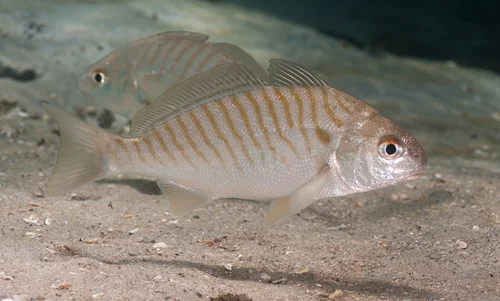
Body silver or bluish above and somewhat golden on belly; 12 – 15 oblique dark streaks extend below lateral line. Mouth small and inferior, lacking barbels on chin. A single dark spot, similar in size to the eyes, is located behind the upper portion of the gill cover.
Habitat & Range
Adults: Inhabit estuaries , tidal creeks , and shallow coastal waters; generally over muddy or sand-mud bottoms; also over oyster reefs and along beaches.
Juveniles: Utilize lower salinity tidal creeks ; yearlings progress to deeper water of lower estuaries and inlets; most common over mud or detritus-laden bottoms and seagrass beds.
Life History
Reproductive Cycle: - Both sexes mature by 2 years of age; approx. size at maturity: 7 – 8 inches.
- Spawn October – March over outer continental shelf. Adults congregate near inlets and beaches during fall prior to offshore and southerly spawning migrations.
- Larval develop offshore, utilizing currents to reach nearshore waters where they metamorphose into bottom dwellers near estuarine inlets; enter estuaries December – April.
Foraging Habits: - Feed on locally available invertebrates including polychaete worms, amphiods, copepods, small mollusks and detritus; adults gulp sediments and sort out invertebrate prey; juveniles graze on bottom-dwelling invertebrates. Larvae consume zooplankton.
Status, Trends & Threats
- One of the most abundant species in estuarine and nearshore coastal waters of the southeast U.S., spot historically supported important commercial and recreational fisheries. Commercial harvest has declined greatly in South Carolina since 1980 but remains significant across the southeast U.S. and northward along the Atlantic coast.
- Abundance in estuaries is primarily temperature-dependent; tolerate wide salinity and temperature fluctuations but move offshore as water cools during fall. Harvested by recreational anglers spring through fall; commercially during the fall run offshore.
- Conservation concerns: degradation and loss of estuarine habitat; pollution and compromised water quality; potential for significant recreational harvest; potential for significant commercial harvest and mortality as by-catch in southeast U.S. shrimp trawl fishery.
Frequently Asked Questions
Size & Record
8 inches, 0.5 pounds; South Carolina State Record: 1 pound, 1 ounce; maximum age: approx. 5 years.