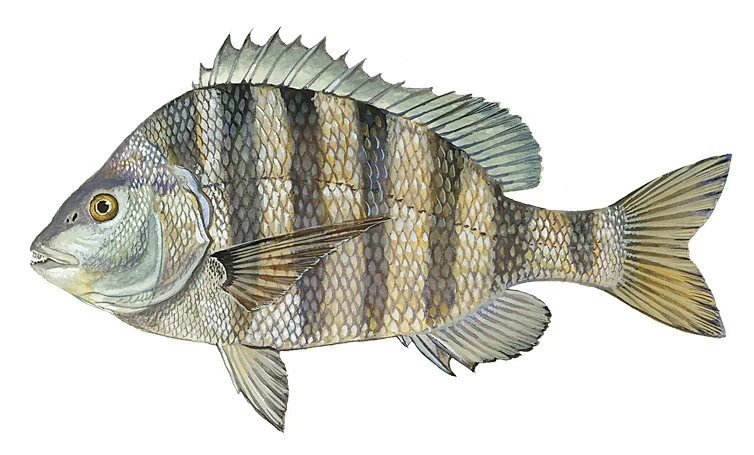
Body gray and nearly oval with 5 – 6 dark vertical bars and one on nape. No dark spot near origin of lateral line. Four broad incisor-like teeth on both sides of anterior jaw, several molar-like teeth also present. Dorsal fin has 12 spines and 11 soft rays. Second spine of anal fin very strong.
Habitat & Range
Adults: Utilize nearshore coastal waters, bays, sounds, and estuaries ; also enter brackish reaches of rivers. Typically associated with reefs, live bottom, wrecks, piers, pilings, rocks, and jetties.
Juveniles: Inhabit grass beds, muddy bottoms, and oyster reefs within estuaries . Older juveniles tolerate higher salinity water near jetties, piers, and other hard structures in coastal waters.
Life History
Reproductive Cycle: - Adults mature between 2 – 5 years of age; approx. size at maturity: males: 7 – 14 inches, females: 9 – 14 inches.
- Spawning occurs in nearshore and offshore waters, probably in the vicinity of wrecks, reefs, or live bottom from late winter through early spring. Eggs hatch offshore, with a month long pelagic (open water) larval stage.
- Larvae develop in nearshore and estuarine waters until reaching approximately 2 inches in length, then occupy hard structure habitats with adults in late summer.
Foraging Habits: - Omnivorous grazers that use their unique teeth to grind and crush invertebrates associated with hard structures. Algae are also consumed, either deliberately or while foraging for associated invertebrate prey. Adults and juveniles share similar diets.
- Adults: Feed primarily on mussels, clams, small oysters, barnacles, crabs, shrimp, and small fish; may also consume tunicates, polychaete worms and amphipods or copepods. Algae may become less important in the diet as sheepshead age and move to offshore reef habitats.
- Juveniles: Consume mainly bivalves and crabs; also feed heavily on filamentous algae and encrusting colonial bryozoans on hard structures. Larvae feed primarily on zooplankton.
Status, Trends & Threats
- Sheepshead are non-migratory and present in South Carolina waters year-round. Distribution is primarily temperature dependent and with movement from nearshore habitats to offshore reefs during cold. Concentrate in shallow waters during late spring and late fall/early winter while returning to or preparing to leave nearshore habitats.
- No commercial fishery exists for sheepshead in South Carolina; however, significant recreational harvest is possible since fish associate with hard structure in close proximity to shore.
- Conservation concerns: degradation and loss of estuarine habitat; compromised water quality; potential for overfishing.
Frequently Asked Questions
Size & Record
14 inches, 3 pounds; South Carolina State Record: 16 pounds, 6 ounces (2008); maximum age: approx. 25 years.