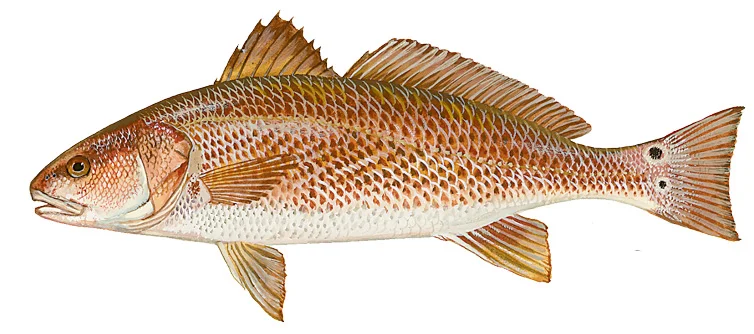
Iridescent silver-gray with a copper cast, darker above; one or more oscillated spots on upper sides from below soft portion of dorsal fin to base of caudal fin. Mouth inferior and horizontal, teeth set in bands on both jaws. Chin without barbels, smooth pre-opercular margin.
Habitat & Range
Adults: Utilize nearshore and inshore bottom habitats, such as tidal creeks , oyster reefs , and beaches, typically over sandy or sandy-mud bottoms; may also congregate in nearshore groups.
Juveniles: Inhabit estuaries near shallow tidal creeks and salt marshes, commonly at marsh grass edges or in the vicinity of oyster reefs ; reside in deeper river channels during winter. Subadults inhabit larger tidal creeks, rivers, and the front beaches of barrier islands.
Life History
Reproductive Cycle: - Adults mature by 3 – 5 years of age; approximate length at maturity: males – 28 inches, females – 33 inches.
- Spawn during late summer and fall. Spawning aggregations occur near estuary inlets and passes along barrier island beaches. Males produce drumming sounds using muscular contractions to vibrate the swimbladder, to attract females.
- Larval red drum use vertical migrations to ride high salinity tidal currents into tidal creeks and shallow salt marsh nursery habitats.
Foraging Habits: - All sizes of red drum are predatory foragers on or near the bottom; inshore foraging (juveniles) typically occurs at marsh grass edges.
- Adults: Feed primarily on menhaden, spot, anchovies, blue crab, and speckled crab.
- Juveniles: Feed on opossum shrimp, grass shrimp, juvenile spot, and mud minnows, mud crabs, and fiddler crabs. Subadult diet is similar to adult fish. Larvae feed primarily on zooplankton and small invertebrates.
Status, Trends & Threats
- Present in South Carolina waters year-round. Distribution is predominantly temperature dependent: juvenile fish progress from marshes and tidal creeks to overwinter in deeper inshore waters; larger adults overwinter offshore and return to nearshore waters during spring.
- No commercial red drum fishery currently exists in South Carolina; potential for recreational harvest is significant since legal size fish inhabit inshore and nearshore waters during a large portion of the year.
- Conservation concerns: degradation and loss of estuarine habitats; lack of information on South Carolina spawning locations; maintenance of optimal numbers of subadult and spawning size fish.
Frequently Asked Questions
Size & Record
18 inches, 2.6 pounds; South Carolina State Record: 75 pounds (1965); maximum age: approx. 38 years (a few individuals as old as 60 have been reported in other states).