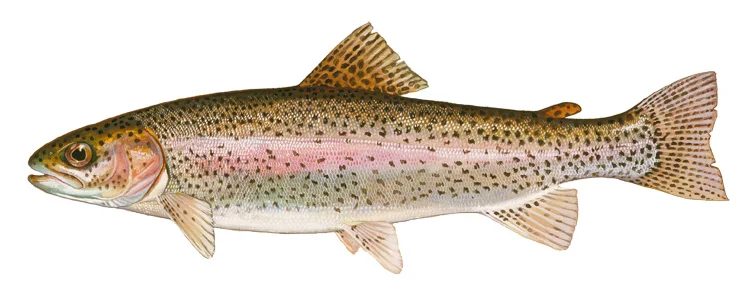
The rainbow trout is relatively sensitive to its environment. Increases in water temperature and siltation are the two biggest threats to the well-being of rainbow trout. Man’s land use practices in mountain areas have accounted for most of the loss of trout habitat in South Carolina.
Improper road construction and logging practices often leave no buffer zone to shade and protect streams from solar heating and soil erosion. Silt from hillsides works its way into streams and smothers trout eggs before they can hatch. Siltation also decreases the amount and diversity of food available to trout.
In addition, a significant portion of South Carolina's limited trout waters have been impounded by utility companies and private individuals. The rainbow trout is not native to South Carolina, but the colorful and popular gamefish has inhabited the state's mountain streams and pleased anglers for well over a century.
Rainbow trout are the most intensively stocked of the three trout species in South Carolina's trout stocking program and account for more than 60% of all trout stocked. This is largely a result of the versatility and ease of culture of the species. Annual stocking of just under 300,000 rainbow trout by the South Carolina Department of Natural Resources greatly expands the recreational fishery for rainbow trout in South Carolina mountain streams, Lake Jocassee and the tailraces of lakes Hartwell and Murray.
Range: Mountain streams of Oconee, Pickens and Greenville counties. Also present in Lake Jocassee and the tailraces of lakes Murray and Hartwell.
Commonly Mistaken Species: Some species of fish that are commonly mistaken for this species:
Brook trout Brown trout
Habitat & Range
The rainbow trout prefers clear and cold waters (not in excess of 68 degrees Fahrenheit) in creeks, rivers, lakes and reservoirs. This habitat exists in tailraces of large impoundments or occasionally in the deeper waters of certain reservoirs. In a normal mountain stream habitat, rainbow trout will inhabit the faster moving waters such as at the head of a pool area.
Life History
Spawning: - Rainbow trout spawning occurs in February and March in the riffle areas of South Carolina mountain streams. The females prepare nesting areas, called redds, by fanning out a shallow depression several inches deep. The eggs are laid, fertilized, covered with gravel and left unattended to incubate and hatch some 30-50 days later. Females are known to deposit eggs in several redds during the spawning process.
- Wild self-sustaining rainbow trout populations occur in South Carolina's mountain region, generally east of the Chattooga Ridge along the Blue Ridge Escarpment in streams with elevations from 1,300 to 3,000 feet. The South Carolina Department of Natural Resources has an active trout stocking program which expands rainbow trout fishing opportunities seasonally, particularly in lower elevation streams.
Diet: - Aquatic and terrestrial insects, crayfish and fishes.
Frequently Asked Questions
Size
7 to 8 inches 4-5 ounces
Lifespan
Approximately 11 years (wild southern Appalachian populations, 4 years)
State Record
: 11 pounds 5 ounces (1993)