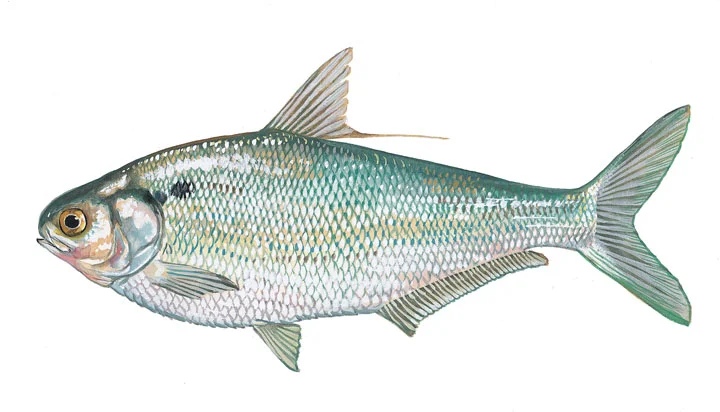
Gizzard shad get their name from their heavy and muscular stomachs that resemble the gizzard of a chicken. The gizzard shad occurs in large numbers in the state’s more productive reservoirs. Here, the shad school in shoreline and open water areas. Gizzard shad are an important prey species for many game fish from hatching through adulthood. However, at full size, they are too large for all but the biggest striped bass, largemouth bass and catfish to consume. Massive die-offs occur in extreme cold weather. They are commonly used as a baitfish.
Range: Statewide, except small streams and foothills streams
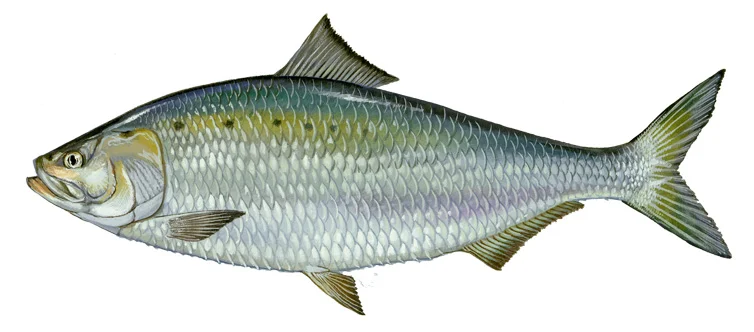
Commonly Mistaken Species: One species of fish that is commonly mistaken for this species is:
Threadfin shad
Habitat & Range
Gizzard shad inhabit large rivers, reservoirs, lakes, ponds, pool and sluggish backwaters.
Life History
Spawning: - Gizzard shad are prolific spawners from March through August. Females release 400,000 sticky eggs that adhere to shallow water substrates until they hatch. The young grow rapidly during their first year, making them available prey for a short period of time.
Diet: - Microscopic plants and animals by filter feeding with their gill rakers (which function like a strainer catching food).
Frequently Asked Questions
Size
10-12 inches 2 pounds
Lifespan
Approximately 10 years