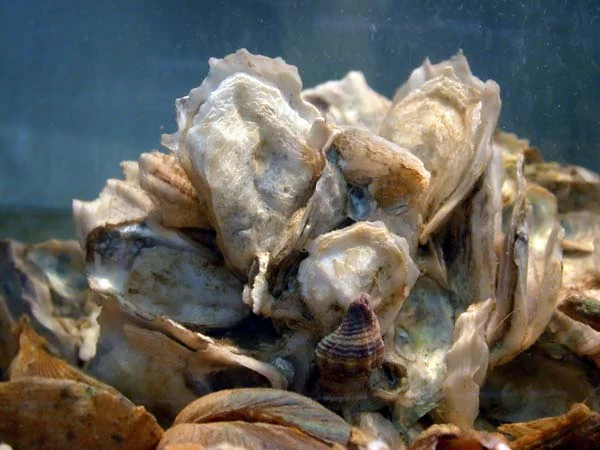
Drab, scaly or encrusted; shape variable; shell ranges from thin, elongated, and highly irregular (intertidal) to heavy and regular (subtidal); left valve typically thicker and concave, right valve relatively flat; posterior adductor muscle scar purple.
Habitat & Range
Estuaries , salt marsh , mudflats, tidal bays and sounds; typically form intertidal reefs extending from just below mean low water to approximately 3 feet higher. Once settled, sessile throughout life.
Life History
Reproductive Cycle: - Mature within months of setting and reproduce by the end of first year. Protandrous hermaphrodites, beginning life as male and switching to female later in life.
- Spawn intermittently May – November when water reaches at least 68°F.
- Fertilization external, producing planktonic larvae. After approx. 2 – 3 weeks larvae metamorphose and “set” on hard substrates to become "spat"; oyster shells/reef preferred substrate. Peak recruitment June – September.
Foraging Habits: - Filter particles from seawater, including phytoplankton, diatoms, dinoflagellates, and detritus. Particles bound in mucus and passed to small palps to be consumed or expelled.
Status, Trends & Threats
- Predominantly intertidal in South Carolina to avoid subtidal predators such as oyster drills. Highly tolerant of temperature and salinity fluctuations where currents deliver suspended food particles without increasing turbidity.
- Oyster reefs provide habitat and support food webs that promote the survival of many recreationally and commercially important species (sheepshead, black drum, red drum, spotted seatrout, flounder, croaker, spot, penaeid shrimp, blue crab) and support anemones, sponges, hydrozoans, crabs, mussels, worms, gobies, blennies.
- Conservation concerns: past uncontrolled harvesting and lack of shell replacement for settling of larvae; degradation and loss of estuarine habitat; compromised water quality (increased runoff, pollution, sedimentation); mortality due to water quality and disease.
Frequently Asked Questions
Size & Record
Market size 4 – 6 inches; at approx. 3 – 5 years of age; can reach harvestable size after 2 – 3 years.