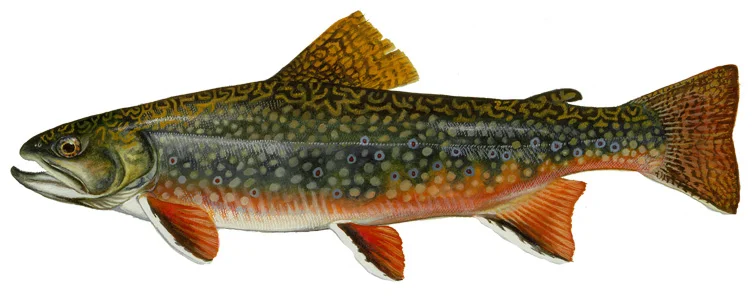
The brook trout is in fact a char. The brook char or brook trout is the only salmonid species native to South Carolina. The brook trout’s security in the unspoiled mountain wilderness gradually changed with the influx of European settlers in the 1800s. Records from the 1870s note the presence of healthy populations of eastern brook trout in the upper Chattooga River. Land use practices of the late 19th and early 20th centuries forced the brook trout to retreat to the state’s most remote headwaters.
Fortunately, the trout's decline did not pass unnoticed. The rainbow trout from the western US and the brown trout from Europe were imported. These introductions had both positive and negative impacts. On one hand, brown and rainbow trout were arguably able to occupy warmer water temperatures in the degraded habitat, and extend farther downstream of historic brook trout habitat. Therefore, these introductions likely increased available natural trout waters, alerted conservationists to protect the trout's habitat and helped create the vast southern Appalachian trout resource anglers enjoy today. On the other hand, the introduction of non-native trout resulted in the displacement of brook trout from their native range in many cases.
Working cooperatively through a range-wide program called the Eastern Brook Trout Joint Venture, the South Carolina Department of Natural Resources, the United States Forest Service and Trout Unlimited are in partnership to restore the native brook trout to representative streams of its historical range.
Range: Mountain streams of Oconee, Pickens and Greenville counties
Commonly Mistaken Species: Some species of fish that are commonly mistaken for this species:
Brown trout Rainbow trout
Habitat & Range
Brook trout prefer small, cool, clear mountain streams with well-oxygenated water.
Life History
Spawning: - Brook trout spawning occurs during October and November when water temperatures approach 50°F.
- The female constructs the nest, called a redd, which is protected by both the male and female trout.
- The female brookie can lay from as few as 100 eggs to more than 5,000.
- Once the eggs are deposited, the male fertilizes them and the eggs are covered with gravel. The eggs hatch in approximately 50 days.
Diet: - Aquatic insects, terrestrial insects, crayfish, salamanders, frogs and fish.
Frequently Asked Questions
Size
4-7 inches 1-3 ounces
Lifespan
Approximately 4-5 years
State Record
: 4 pounds 10 ounces (2010)