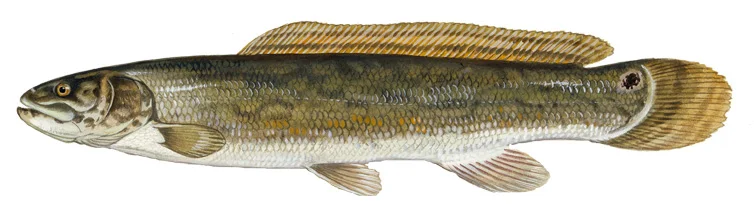
The bowfin is the only remaining member of an ancient group of fish which lived over 180 million years ago. The bowfin has several features similar to a gar. The head is covered with bony plate-like armor and much of the skeleton consists of cartilage. Bowfin can survive in poor water quality with low oxygen levels by breathing air directly into its swim bladder that will function similar to a lung. Anglers enjoy the strength and endurance of the bowfin, but not the taste.
Range: Bowfin are primarily found in the Coastal Plain with a few records in the Piedmont.
Commonly Mistaken Species: Some species of fish that are commonly mistaken for this species are northern snakehead (which is a non-native not currently found in South Carolina). The northern snakehead has a long anal fin (short in the bowfin) and pelvic fins which are positioned directly below the pectoral fins. If caught, snakeheads should be placed in a cooler and immediately reported to the South Carolina Department of Natural Resources at 803-734-3891. Snakeheads should not be released back into the environment. Do you know the difference ( PDF ) (file size 3mb)
Habitat & Range
Sluggish coastal rivers, backwaters, swamps, creeks, ditches and borrow pits. It can also be found in clear water but usually concealed in and near vegetation, logs, branches and other shelter.
Life History
Spawning: - Bowfin spawn from March to early June. Males construct nests in shallow water by fanning their fins. They will use their mouths to bite and clear any debris or vegetation.
- Females can deposit up to 55,000 sticky eggs, usually at night. The male will protect the nest during incubation of the eggs and after they have hatched.
- Once the young hatch, they stay in compact groups and continue to be guarded by the males for some time.
Diet: - Fish, crayfish, and all other living aquatic animals.
Frequently Asked Questions
Size
1 ½-2 feet 2 pounds
Lifespan
Approximately 10 years
State Record
: 21 pounds 8 ouncs(1957); 15 pounds 7 ounces (Bowfishing)