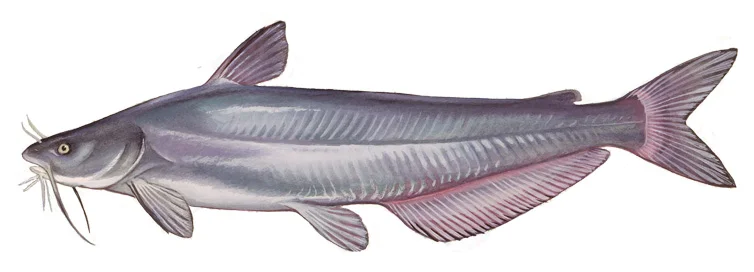
The blue catfish is one of the largest freshwater fishes found in North America. They were first introduced into South Carolina in 1964 when they were stocked into Lake Marion.
Range: Blue catfish are native to the Mississippi River basin. In South Carolina, blue catfish are found in almost every drainage. This species is found in South Carolina Department of Natural Resources’ public fishing lakes and large impoundments such as lakes Wateree, Marion and Moultrie.
Commonly Mistaken Species: Some species of fish that are commonly mistaken for this species:
White catfish Channel catfish
Habitat & Range
Blue catfish prefer rivers and large creeks with moderate to swift current over rock, gravel or clean sandy bottoms; however, they also do well in large impoundments.
Life History
Spawning: - Spawning occurs in late spring or early summer in water temperatures of 70-75° F.
- Egg masses are deposited in cavities afforded by logs, brush or undercut riverbanks.
- Unlike other catfish, the male and female both assist in guarding the eggs and the young while they remain in the nest.
Diet: - The blue catfish feeds on a variety of organisms including clams, snails, aquatic insects, freshwater mussels, fish and plant material.
Frequently Asked Questions
Size
20 - 45 inches 3 - 40 pounds, Approximate Maximum Size: About 120 pounds in recent years, although in the 1800's, 300-pound fish were caught from the Missouri River.
Lifespan
Approximately 34 years
State Record
South Carolina State Record : 109 pounds 4 ounces (1991)