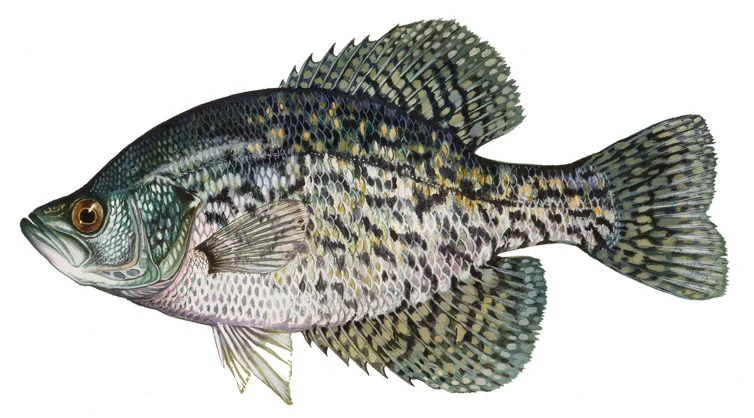
The black crappie is very similar to the white crappie, differing slightly only in some body characteristics, color patterns and habitat preference. In most impoundments, one species or the other will predominate. The crappie is one of the most popular sport fishes in South Carolina. It is relatively easy to locate and catch and it has a very good flavor.
Crappie are often found in large numbers around piers and brush. These loose aggregations are not really schools of fish but they can appear to come and go as they are fished out of a small area. The Department of Natural Resources constructs and marks brush piles designed to attract crappie as a service to anglers. These fish attractors do a good job of attracting crappie but fishing pressure can reduce the number of fish at the site for short periods of time.
Range: Statewide
Commonly Mistaken Species: Some species of fish that are commonly mistaken for this species: White crappie
Habitat & Range
The two species of crappie are found in almost all waters with the exception of mountain streams. They are more abundant in large impoundments, natural lakes and backwaters.
White crappie are more tolerant of turbid conditions with the black crappie preferring clearer lakes.
Life History
Spawning: - As water temperatures approach 60° F, in late February and early May male black crappie build their nests on top of sand, gravel or mud in shallow water.
- Nests range from 8 to 15 inches in diameter and are usually found in colonies, with as many as 30 nests found in a 9-square yard area.
- Females deposit from 3,000 to 15,000 eggs per spawn, but may spawn with several different males. Large females have the potential to lay up to 150,000 eggs.
- The fertilized eggs are guarded by the male until hatching after 2 to 3 days and guarding continues for an additional 3 to 4 days until fry leave the nest.
Diet: - Young crappie feed on invertebrates such as zooplankton and insects. At about 7 inches, fish become more prevalent in the diet.
- In large impoundments, adult crappie feed on threadfin shad and small gizzard shad throughout the year, however, they will feed extensively on mayfly nymphs during the summer months.
Frequently Asked Questions
Size
5.1 - 19.3 inches ½ to 1¼ pounds, approximate maximum size five-pounds
Lifespan
Approximately 10 years
State Record
: 5 pounds (1957)