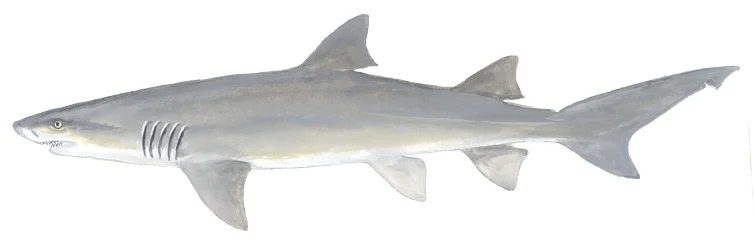
- Snout bluntly rounded, shorter than width of mouth
- Back is yellowish-green, brown or olive-gray, fading to a white belly
- First and second dorsal fins are nearly equal in size
- No interdorsal ridge
Similar Species: Bull shark, C. leucas (first and second dorsal fins are unequal in size); nurse shark, G. cirratum (has nasal barbels)
Habitat & Range
An abundant, inshore tropical shark that inhabits both estuarine and nearshore waters of the Gulf and Atlantic coasts of Florida. Commonly enters estuarine waters and often ventures into freshwater areas, but does not penetrate as far up rivers as the Bull shark. Migrates southward and into deeper waters in the winter months.
Life History
Mating occurs during early summer months and after 12 months of gestation, females give birth to live young in shallow flats. Broods contain 4-18 pups. Size at birth about 2 feet. Juveniles use seagrass flats, mangrove forests, and tidal creeks as nursery areas.
Frequently Asked Questions
Size
Maximum size about 9-10 feet. Matures at approximately 11-12 years of age (about 8 feet) and is estimated to live 27+ years.