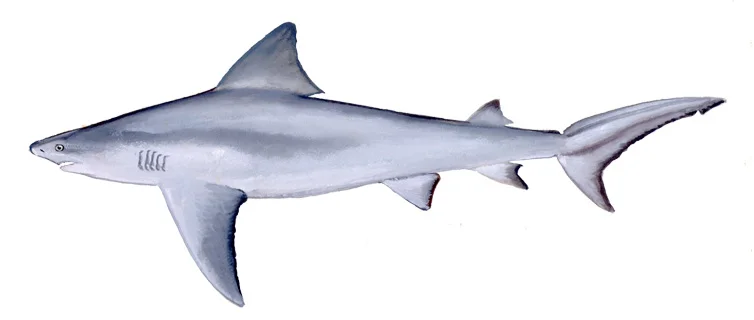
- Back is pale to dark gray, fading to a white belly
- Snout bluntly rounded, much shorter than width of mouth
- First dorsal fin has wide base, almost as wide as height; begins over or just behind pectoral fin insertion
- 2 nd dorsal fin is much shorter than the 1 st dorsal fin.
- No interdorsal ridge
- Deep body that is stockier than many other shark species
Similar Species: Lemon shark, N. brevirostris (first and second dorsal fins nearly equal in size); Caribbean reef shark, C. perezii (has interdorsal ridge); and sandbar shark, C. plumbeus (first dorsal fin starts before pectoral fin insertion)
Habitat & Range
Inhabits estuarine, nearshore and offshore waters of both the Gulf and Atlantic coasts of Florida. Bull sharks have a wide range of salinity tolerances and commonly enter freshwater systems as well as hypersaline lagoons. They are the only shark species that can tolerate long periods of freshwater exposure, sometimes venturing hundreds of miles inland via coastal river systems.
Life History
Mating occurs during the summer and after 10-11 months of gestation, females give birth to live young in river mouths, shallow estuaries, and coastal lagoons. Broods contain 1-13 pups. Size at birth about 2.4 feet.
Frequently Asked Questions
Size
Maximum size is about 10-11 feet. Matures at approximately 14-18 years of age (about 7 feet) and is estimated to live longer than 30 years.