Also known as: Bear River Cutthroat Trout
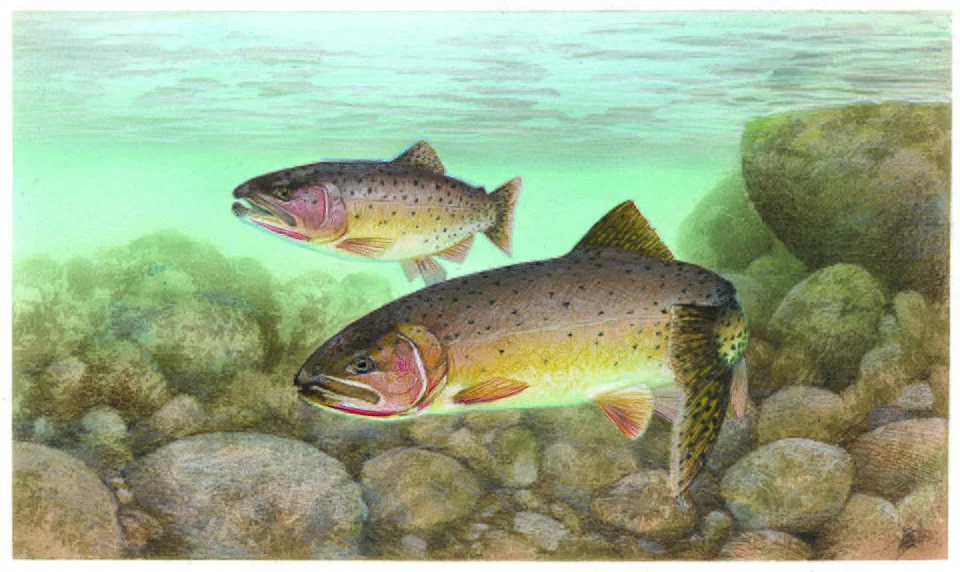
Description: The defining feature of the Bonneville Cutthroat Trout, as with other cutthroat trout, is the red slash beneath the jaw. What sets the Bonneville apart is its comparatively duller coloration and uniform large, round spotting that is more concentrated towards the tail of the fish. Also called Bear River Cutthroat Trout.
Diet: Zooplankton, freshwater shrimp, and both terrestrial and aquatic insects. Larger individuals also consume other fish and crayfish.
Habitat & Distribution: Historically, Bonneville cutthroat inhabited the Bonneville Basin across parts of Utah, Idaho, Wyoming, and Nevada. Scientists once believed pure strains were extinct, but rediscovered populations and restoration work now support them across roughly 70,000 acres of lakes and 850 miles of streams. In Wyoming, they occur in the Bear River drainage near Evanston and in the Smiths and Thomas Forks of the Bear River near Cokeville.
Size: 10 to 25 inches, growing beyond 30 inches under ideal conditions. Weight: 2 to 6 pounds on average, exceeding 10 pounds under ideal conditions.
Lifespan: Typically 4–6 years in the wild, potentially reaching 10+ years.
Habitat & Range
Bonneville Cutthroat Trout historically inhabited the Bonneville Basin across parts of Utah, Idaho, Wyoming, and Nevada. In Wyoming, they occur in the Bear River drainage near Evanston and in the Smiths and Thomas Forks of the Bear River near Cokeville.
Life History
Bonneville Cutthroat Trout are spring spawners that can spawn annually. Females construct gravel nests (redds) to deposit eggs, which males then fertilize. Egg count depends on the female's size and age, with each female laying roughly 2,000 eggs. Lifespan: typically 4–6 years in the wild, potentially reaching 10+ years.
Status, Trends & Threats
Due to habitat loss and the introduction of non-native species, the Bonneville cutthroat trout has seen a significant decline in numbers. Not officially listed as endangered, but considered a species of concern. Conservation efforts focus on habitat restoration, protecting spawning grounds, removing non-native species, and stocking to support natural reproduction.
License & Regulations
A valid Wyoming fishing license is required for anglers age 14 and older. Licenses are available for residents, non-residents, and short-term durations (1-day and annual). Purchase online through the Wyoming Game and Fish Department website or at authorized license retailers throughout the state.
Frequently Asked Questions
Description
The defining feature of the Bonneville Cutthroat Trout is the red slash beneath the jaw. What sets the Bonneville apart is its comparatively duller coloration and uniform large, round spotting that is more concentrated towards the tail.
What is another name for Bonneville Cutthroat Trout?
Bonneville Cutthroat Trout is also known as Bear River Cutthroat Trout.
Habitat
Historically inhabited the Bonneville Basin across parts of Utah, Idaho, Wyoming, and Nevada. In Wyoming, they occur in the Bear River drainage near Evanston and Cokeville.
Diet
Zooplankton, freshwater shrimp, and both terrestrial and aquatic insects. Larger individuals also consume other fish and crayfish.
Size
10 to 25 inches, growing beyond 30 inches under ideal conditions. Weight: 2 to 6 pounds on average.
State Record
No specific state record listed for this species.
Regulations
Bonneville Cutthroat Trout is classified as a game fish in Wyoming. A valid Wyoming fishing license is required. Each cutthroat subspecies is stocked around the state in areas outside their native ranges. Check Wyoming Game and Fish Department regulations for current rules.
References
| State | Category | Directory | Subcategory | Content | Source |
|---|---|---|---|---|---|
| Wyoming | Fishing | License | License & Fees | A valid Wyoming fishing license is required for anglers age 14 and older. Licenses are available for residents, non-resi | Link |