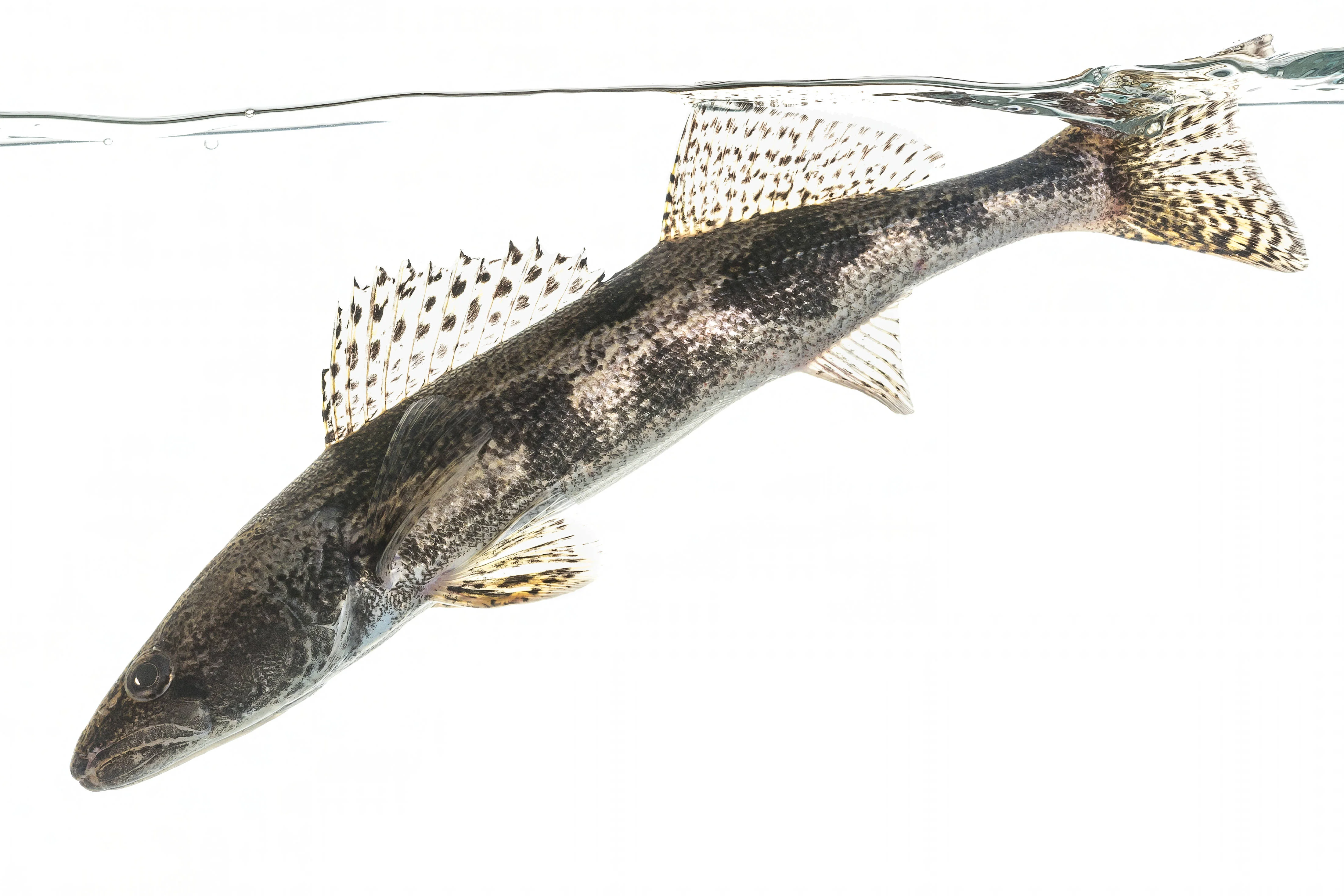
Identification: Saugeye are similar to sauger in appearance. The best way to identify a fish that you feel may be either a walleye, sauger or saugeye is to look at the fish’s spiny dorsal fin. Walleye will have a rather large black blotch on the fins rear quarter and no dark fin coloration elsewhere; sauger will have rows of small dark spots on this fin, and saugeye will have dark coloration throughout the webbing on this dorsal fin. This coloration in a saugeye will have no set pattern.
Habitat: Saugeye were stocked into selected West Virginia reservoirs starting in 1990. However, these waters were changed to walleye fingerling stockings in 2002. Saugeye may be still be found in the following U. S. Army Corps of Engineers Reservoirs: Burnsville, East Lynn, and Beech Fork and are also caught in the Ohio and Kanawha rivers. They typically are more tolerant of warm water than walleye and may be more suited to life in turbid reservoirs. Saugeye often run upriver in winter and spring and congregate in tailwater areas below dams.
Other: As a product of female walleye and male sauger, saugeye have similarities to both fish in coloration. They are part of the perch family, which are small stream dwellers.
Habitat & Range
Saugeye were stocked into selected West Virginia reservoirs starting in 1990. However, these waters were changed to walleye fingerling stockings in 2002. Saugeye may be still be found in the following U. S. Army Corps of Engineers Reservoirs: Burnsville, East Lynn, and Beech Fork and are also caught in the Ohio and Kanawha rivers. They typically are more tolerant of warm water than walleye and may be more suited to life in turbid reservoirs. Saugeye often run upriver in winter and spring and congregate in tailwater areas below dams.
Status, Trends & Threats
Saugeye are produced at fish hatcheries. Female walleyeare crossed with male sauger which result in a hybrid known as saugeye . They must be stocked routinely in order to maintain fishable populations. At this time, WVDNR is currently not stocking them, but fish remain at certain locations from past stockings.
License & Regulations
A valid West Virginia fishing license is required for anglers age 15 and older. Licenses are available for residents, non-residents, and short-term durations. A West Virginia Trout Stamp is required to fish for or possess trout in designated trout waters. Purchase online through the West Virginia Division of Natural Resources website or at authorized license retailers throughout the state.
Frequently Asked Questions
Identification
Saugeye are similar to sauger in appearance. The best way to identify a fish that you feel may be either a walleye, sauger or saugeye is to look at the fish’s spiny dorsal fin. Walleye will have a rather large black blotch on the fins rear quarter and no dark fin coloration elsewhere; sauger will have rows of small dark spots on this fin, and saugeye will have dark coloration throughout the webbing on this dorsal fin. This coloration in a saugeye will have no set pattern.
Habitat
Saugeye were stocked into selected West Virginia reservoirs starting in 1990. However, these waters were changed to walleye fingerling stockings in 2002. Saugeye may be still be found in the following U. S. Army Corps of Engineers Reservoirs: Burnsville, East Lynn, and Beech Fork and are also caught in the Ohio and Kanawha rivers. They typically are more tolerant of warm water than walleye and may be more suited to life in turbid reservoirs. Saugeye often run upriver in winter and spring and congregate in tailwater areas below dams.
Interesting Facts
Saugeye, like their parent species, walleye and sauger feed primarily on other fish. Fishing techniques are similar to those used for sauger and walleye. Use walleye fishing techniques when fishing in reservoirs and sauger techniques while fishing on rivers. The WV state length record saugeye is 27.68 inches and 8.73 lbs. (Evert Chapman, 2006).
Regulations
West Virginia fishing regulations apply to Saugeye. A valid West Virginia fishing license is required for anglers 15 and older. Bag and size limits vary by species and water body. Some waters have special regulations including catch-and-release only, artificial lures only, or specific size limits. Check the West Virginia Division of Natural Resources Fishing Regulations for current rules specific to your fishing location.
References
| State | Category | Directory | Subcategory | Content | Source |
|---|---|---|---|---|---|
| West Virginia | Fishing | License | License & Fees | A valid West Virginia fishing license is required for anglers age 15 and older. Licenses are available for residents, no | Link |