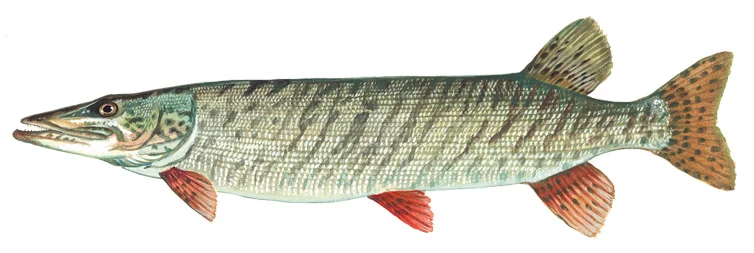
Habitat: Muskellunge are found in a variety of waters in West Virginia—from small streams to large rivers, lakes, and reservoirs. Their native range includes the Ohio River drainage, but WVDNR stocking efforts have expanded their presence beyond historic boundaries. Muskies prefer slack water with dense cover such as woody debris, downed trees, and other submerged structures.
Other: Muskellunge are often confused with northern pike, chain pickerel, and tiger muskellunge (a northern pike/muskellunge hybrid). Northern Pike and Chain Pickerel: Rare in West Virginia, but present. Tiger Muskellunge: Stocked by WVDNR in Big Ditch, Charles Fork and Mountwood Lakes to create novelty fisheries. These hybrids have prominent side barring, grow larger than pike and strike aggressively.
Habitat & Range
Muskellunge are found in a variety of waters in West Virginia—from small streams to large rivers, lakes, and reservoirs. Their native range includes the Ohio River drainage, but WVDNR stocking efforts have expanded their presence beyond historic boundaries. Muskies prefer slack water with dense cover such as woody debris, downed trees, and other submerged structures.
Status, Trends & Threats
Habitat loss and water quality degradation are two of the biggest threats to muskellunge populations. In naturally reproducing streams, siltation and other land-use-related issues can reduce survival and recruitment. Historically, overharvest was a significant threat. Since the 1990s, angler attitudes have shifted. Today, many anglers practice catch-and-release, especially for large, long-lived fish. This change has been influenced by stricter harvest regulations and outreach by fisheries managers and sportsmen’s groups.
License & Regulations
A valid West Virginia fishing license is required for anglers age 15 and older. Licenses are available for residents, non-residents, and short-term durations. A West Virginia Trout Stamp is required to fish for or possess trout in designated trout waters. Purchase online through the West Virginia Division of Natural Resources website or at authorized license retailers throughout the state.
Frequently Asked Questions
Habitat
Muskellunge are found in a variety of waters in West Virginia—from small streams to large rivers, lakes, and reservoirs. Their native range includes the Ohio River drainage, but WVDNR stocking efforts have expanded their presence beyond historic boundaries. Muskies prefer slack water with dense cover such as woody debris, downed trees, and other submerged structures.
Interesting Facts
The current International Game Fish Association all-tackle world record musky, caught by Cal Johnson in 1949 from Lake Court Oreilles in Wisconsin, weighed 67 pounds, 8 ounces. For the most current West Virginia state musky record catches, check page 28 in the West Virginia Fishing Regulations Summary . Muskies are curious and often follow lures to the boat without striking. A common tactic is to move the lure in wide arcs or a “figure-8” beside the boat to trigger a reaction strike. Boat-side strikes are one of the most thrilling aspects of musky fishing. West Virginia is also home to several renowned musky lure makers whose handcrafted baits are used by anglers across the country.
Regulations
West Virginia fishing regulations apply to Muskellunge. A valid West Virginia fishing license is required for anglers 15 and older. Bag and size limits vary by species and water body. Some waters have special regulations including catch-and-release only, artificial lures only, or specific size limits. Check the West Virginia Division of Natural Resources Fishing Regulations for current rules specific to your fishing location.
References
| State | Category | Directory | Subcategory | Content | Source |
|---|---|---|---|---|---|
| West Virginia | Fishing | License | License & Fees | A valid West Virginia fishing license is required for anglers age 15 and older. Licenses are available for residents, no | Link |