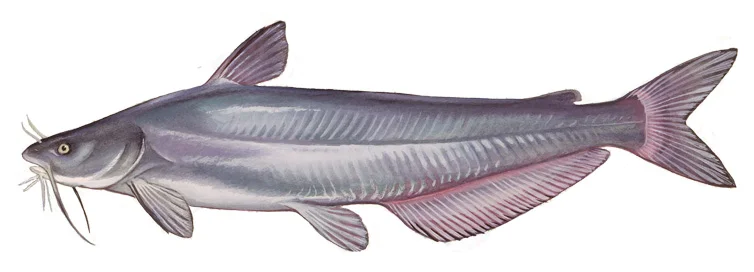
Identification: Bullheads are medium-sized catfish. They are dark in color and have a short and stocky body, which makes them a rather chunky fish. Their head is more round than other catfish, and the tail is square. Bullheads seldom exceed 10 inches in length.
Habitat: Bullheads can be found in some of West Virginia’s lakes, reservoirs, streams and farm ponds. They feed primarily on bottom dwelling insects and crayfish. Bullheads live in a variety of habitats, including brackish and/or low oxygen ponds, rivers and lakes, although they are seldom stocked intentionally. Fishing techniques are similar to those utilized for channel catfish. Their diet consists of plant and animal matter found on the bottom.
Other: To tell the difference between a bullhead catfish and channel catfish, look for a square tail. Only channel catfish will have deeply forked tails. Flathead catfish have a terminal mouth with the lower jaw slightly longer.
Habitat & Range
Bullheads can be found in some of West Virginia’s lakes, reservoirs, streams and farm ponds. They feed primarily on bottom dwelling insects and crayfish. Bullheads live in a variety of habitats, including brackish and/or low oxygen ponds, rivers and lakes, although they are seldom stocked intentionally. Fishing techniques are similar to those utilized for channel catfish. Their diet consists of plant and animal matter found on the bottom.
Status, Trends & Threats
Bullheads can tolerate very low dissolved oxygen levels and are common in West Virginia with no conservation concerns.
License & Regulations
A valid West Virginia fishing license is required for anglers age 15 and older. Licenses are available for residents, non-residents, and short-term durations. A West Virginia Trout Stamp is required to fish for or possess trout in designated trout waters. Purchase online through the West Virginia Division of Natural Resources website or at authorized license retailers throughout the state.
Frequently Asked Questions
Identification
Bullheads are medium-sized catfish. They are dark in color and have a short and stocky body, which makes them a rather chunky fish. Their head is more round than other catfish, and the tail is square. Bullheads seldom exceed 10 inches in length.
Habitat
Bullheads can be found in some of West Virginia’s lakes, reservoirs, streams and farm ponds. They feed primarily on bottom dwelling insects and crayfish. Bullheads live in a variety of habitats, including brackish and/or low oxygen ponds, rivers and lakes, although they are seldom stocked intentionally. Fishing techniques are similar to those utilized for channel catfish. Their diet consists of plant and animal matter found on the bottom.
Interesting Facts
The West Virginia state length record bullhead is 22.75 inches and 6.1 pounds (Gary R. Freeman, 1977). The world record is 8.02 pounds in New York State in 2015.
Regulations
West Virginia fishing regulations apply to Bullhead Catfish. A valid West Virginia fishing license is required for anglers 15 and older. Bag and size limits vary by species and water body. Some waters have special regulations including catch-and-release only, artificial lures only, or specific size limits. Check the West Virginia Division of Natural Resources Fishing Regulations for current rules specific to your fishing location.
References
| State | Category | Directory | Subcategory | Content | Source |
|---|---|---|---|---|---|
| West Virginia | Fishing | License | License & Fees | A valid West Virginia fishing license is required for anglers age 15 and older. Licenses are available for residents, no | Link |