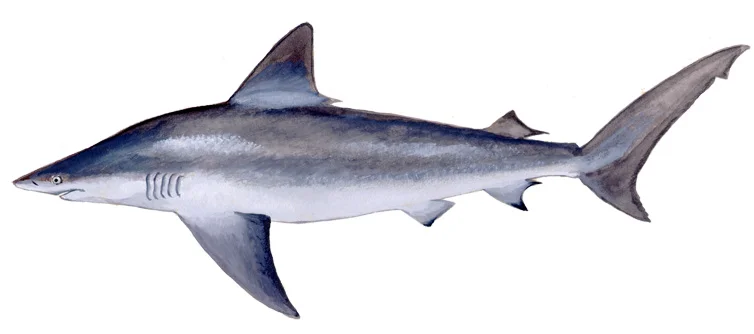
Sandbar Shark s are commonly mistaken for the bull shark. The upper side is bluish to brownish gray with the underside a lighter shade of the same color to white. The first pectoral fins are large and broad. The dorsal fins are differently shaped. They have a defined interdorsal ridge (ridge of skin going down the back between the two dorsal fins). The upper teeth are broadly triangular and serrated. The lower teeth are narrower and more finely serrated.
Diet: small fishes, eels, skates, rays, dogfish, squids, shrimps, and crabs
Habitat & Range
The Sandbar Shark is a bottom-dwelling, shallow coastal water species that is seldom seen at the water's surface. They feed primarily on small fishes, eels, skates, rays, dogfish, squids, shrimps, and crabs.
Where to Fishing
Atlantic Ocean, Delaware Bay and Inland Bays
Fishing Season
The sandbar & sand tiger are toothed sharks commonly taken in the nearshore waters of the state and are prohibited species. Like all prohibited species, they must be immediately released to ensure the maximum probability of survival.
Frequently Asked Questions
Fishing Tips
It is unlawful to release a Sandbar Shark in a manner that will not ensure the shark's maximum probability of survival (e.g., no gaffs, no clubbing, careful hook removal, etc.). It is unlawful for any hook and line fisherman to remove a Sandbar Shark from the water.
References
| State | Category | Directory | Subcategory | Content | Source |
|---|---|---|---|---|---|
| Delaware | Fishing | Regulations | Season Dates | The sandbar & sand tiger are toothed sharks commonly taken in the nearshore waters of the state and are prohibited speci | Link |