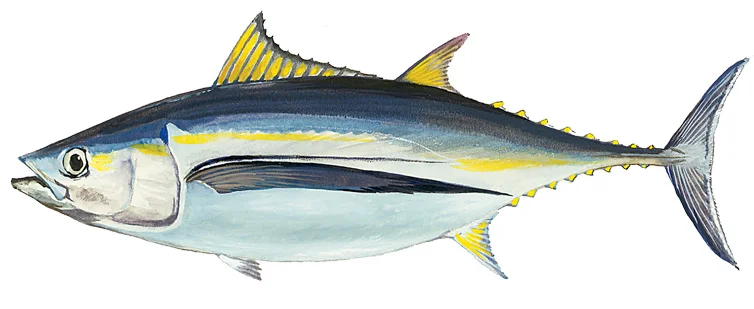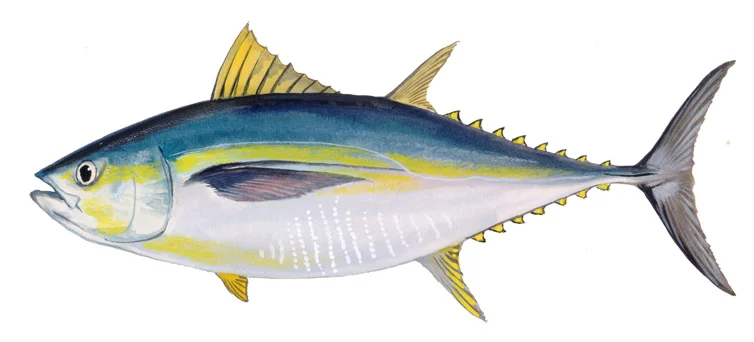
Bigeye Tuna are generally smaller than bluefin and larger than yellowfin. This species is a dark metallic blue on the back and upper sides with white lower sides and belly. The first dorsal fin is deep yellow, the second dorsal and anal fins are pale yellow, and the finlets are bright yellow with black edges.
Diet: shrimps, squids, mackerels, and other small tunas
Habitat & Range
The Bigeye Tuna is an oceanic species that prefers deep, wide open waters. They are a schooling fish, often mixed with other tuna. They feed primarily on shrimps, squids, mackerels, and other small tunas.
Where to Fishing
Atlantic Ocean
Frequently Asked Questions
Fishing Tips
Bigeye Tuna can be caught by trolling with rubber skirted lures or natural baits. Bait fisherman often chum, called "chunking", when fishing for tuna. Chunking uses pieces of fish tossed into the water while drifting or anchored to attract tuna close to the fishing vessel. Anglers then drift a piece of fish with a hook in it, hoping for a bite.