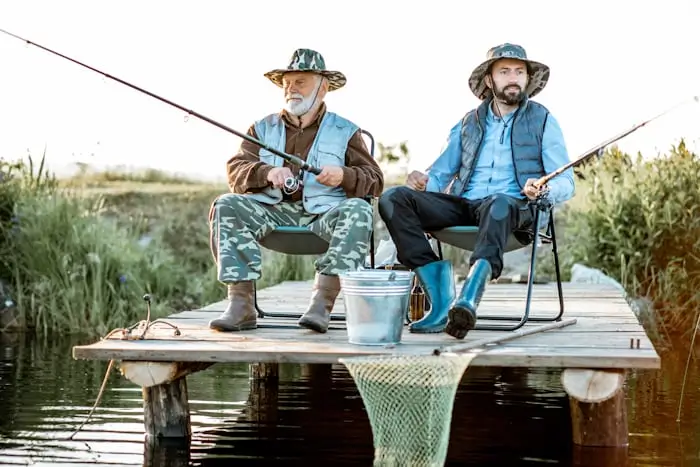
Fishing has a way of humbling the most confident beginner and rewarding the most patient observer. Unlike many hobbies, it resists shortcuts. You can own excellent gear, read every technique guide available, and still come home empty-handed — while the person next to you with a modest rod and a worm pulls in fish after fish. What separates consistent anglers from occasional ones usually has nothing to do with equipment. It has everything to do with understanding a handful of principles that experienced fishers discover, often the hard way, over years on the water.
Think Like a Biologist, Not a Consumer
One of the most transformative shifts a new angler can make is to stop thinking about gear and start thinking about fish behavior. Fish are not randomly distributed in a body of water. They are there for specific, logical reasons — feeding, seeking shelter, regulating body temperature, avoiding predators, or reproducing. Understanding those reasons is the foundation of finding fish consistently.
A hungry fish moves toward food. A cold or overheated fish seeks the thermal comfort of deeper water. A fish threatened by a predator retreats under a log, into a weed bed, or beneath a submerged rock ledge. When you understand what a fish needs at a given moment, you can predict where it will be — and that knowledge is far more valuable than any piece of tackle.
Larger, older fish are especially deliberate in their behavior. They haven't survived long by being careless. They've learned where the best ambush points are, how to avoid fishing pressure, and how to expend minimal energy for maximum reward. To target them consistently, you have to think the way they do: efficiently, purposefully, and with an eye for structure and cover.
Key Insight: Marketing targets anglers, not fish. Worry more about the where and the why, and less about which brand made your lure. A well-placed budget bait in the right location consistently outfishes an expensive lure cast into empty water.
The 90/10 Rule: Fish Where the Fish Are
A principle widely cited among experienced anglers goes something like this: ninety percent of the fish occupy just ten percent of the water at any given time. The most important skill in fishing, then, is identifying that ten percent.
Fish concentrate around structure — anything that breaks up an otherwise uniform environment. This includes underwater drop-offs, submerged brush piles, rocky points, bridge pilings, weed edges, docks, and current seams in rivers. These features create ambush opportunities for predators and refuge for prey. Finding structure is often more productive than any bait selection decision you can make.
Related to this is a simple but underappreciated rule: fish your feet first. Before casting far out into open water, work the area immediately around you. Fish — especially bass and trout — often hold surprisingly close to shore, particularly in shaded areas or near any form of cover. Many anglers walk straight to the water's edge and immediately launch their longest cast, inadvertently spooking fish that were right in front of them.
Once you do locate a productive spot, resist the urge to abandon it prematurely. A companion principle to finding fish is: don't leave fish to find fish. If a spot is producing bites, even sporadically, it's likely worth staying. Patience in a known productive area almost always outperforms restless movement across water that hasn't revealed itself.
Pro Tip: On a new body of water, spend the first 20 minutes walking and observing rather than casting. Look for surface activity, baitfish, shade, and structural features. The fish you locate by eye will save you hours of blind casting.
Bait Size: Think Smaller Than You Think
Many beginners assume that bigger bait attracts bigger fish. While there's some truth to this in certain contexts, experienced anglers know that truly large fish are often quite willing to eat small, natural-looking offerings. The concept known as "matching the hatch" — presenting a bait that resembles what fish are naturally feeding on in that water at that time — often means going smaller, not larger.
Observing what's naturally present in the water is the most reliable guide. Are small baitfish dimpling the surface? Are insects hatching? Are shrimp present in the shallows? Whatever prey species are most abundant and most actively moving is likely what predators are keying in on. A presentation that closely resembles that natural food source — in size, color, and movement — will usually outperform something dramatically different, regardless of how attractive it looks in the tackle shop.
For beginners especially, starting with smaller, simpler bait presentations tends to produce more bites and more learning opportunities. Panfish, which are forgiving and abundant in many freshwater environments, will take small hooks with small pieces of bait readily — and catching them builds both confidence and technique that transfers to targeting larger species later.
Pro Tip: At the tackle shop, pay attention to which lure colors and sizes are selling out or sitting on empty pegs — local anglers have already done the testing for you. Those gaps on the rack are a reliable signal of what's actually working on nearby water.
Slow Down More Than You Think You Should
Speed is one of the most common errors among newer anglers. There's a natural impulse to keep moving, keep casting, keep retrieving — to feel like you're actively doing something. In many situations, however, slowing everything down dramatically increases your chances.
This applies to retrieval speed when working lures: a slower, more deliberate retrieve often triggers strikes from fish that showed no interest in the same lure moved faster. It applies to how long you give a spot before moving on. And it applies to your approach to the water itself — moving quietly, carefully, and without disturbing the surrounding environment.
Fish are acutely sensitive to vibration and disturbance. Heavy footsteps along a bank, a loud splash, or aggressive movement in shallow water can put fish off the bite for extended periods. The angler who approaches slowly, stays low, and casts gently will almost always outperform someone crashing noisily to the water's edge.
Key Insight: A lure worked too fast is one of the single most common reasons anglers get no bites in otherwise productive water. When in doubt, halve your retrieval speed — then halve it again. Let pauses do the work.
Master Your Drag — Before You Need It
The drag system on a fishing reel is one of its most critical and most misunderstood components. The drag applies resistance to a running fish, allowing line to peel off the reel in a controlled way rather than snapping under sudden pressure. Set it correctly, and you can fight fish far heavier than your line's breaking strength. Set it wrong, and even a modest fish can break you off.
A widely recommended guideline is to set your drag at roughly 15 to 25 percent of your line's breaking strength. In practical terms, if you're using 20-pound test line, the drag should yield — start slipping — when about 3 to 5 pounds of pressure is applied. A simple way to check this is to pull line from the reel by hand with the drag engaged: it should give some resistance but release steadily rather than holding completely or slipping immediately.
The critical habit is to set the drag before you start fishing, not after a fish is already running. Making drag adjustments during a fight is possible but risky, especially for less experienced anglers. Check it at the start of each session, and any time you change line weight or switch to a different target species. It's a small step that prevents a disproportionate number of lost fish.
Pro Tip: If you loan your rod to someone else — say, a child fishing for small panfish — remember to readjust the drag for your next session. A drag tightened for small fish can snap line the moment something big makes its first run.
Knots: The Last Point of Failure
Every connection between you and a fish runs through your knot. No matter how well you've read the water, how perfectly you've presented the bait, or how skillfully you've played the fish — a poorly tied knot can undo all of it in an instant.
A few practices make a meaningful difference. First, retying your hook at the start of every session is good discipline; line at the connection point weakens with use and UV exposure, and what looked fine last trip may be compromised now. Second, always moisten a knot before drawing it tight — friction from a dry cinch generates heat that can weaken monofilament and fluorocarbon lines significantly. Third, check the last few inches of line near your hook periodically during a session; abrasion from rocks, teeth, or repeated casting can create weak points that aren't visible without close inspection.
Two Knots Worth Mastering
- Palomar Knot — Exceptionally strong, works well with braided and monofilament line, and is quick to tie once practiced.
- Improved Clinch Knot — The universal standard; reliable for most hook and lure connections across line types.
Both are reliable, relatively simple, and sufficient for the vast majority of situations. Practicing them at home until they're second nature means you won't be fumbling with cold, wet hands when it matters.
Adapt When Something Isn't Working
One of the most quietly powerful pieces of wisdom passed between anglers is this: if what you're doing isn't working, try something completely different. Not slightly different — completely different. Switch from small lures to large ones. Switch from artificial to live bait. Change your depth, your location, or your presentation style entirely.
There is a natural human tendency to keep doing what feels logical, even when evidence suggests it isn't working. Fish don't follow our logic. On any given day, their behavior is shaped by water temperature, barometric pressure, light levels, recent feeding patterns, and other variables we can't fully measure. The angler who adapts freely — willing to abandon a comfortable approach and experiment — will consistently learn more and catch more than one who doubles down on a non-productive technique.
Key Insight: Use baits and presentations you have genuine confidence in. Anglers tend to fish with more focus and attention when they believe in what they're throwing — and that focus itself leads to more strikes. When adapting, commit fully rather than half-heartedly cycling through options.
It's Called Fishing, Not Catching
Underneath all the technique and knowledge, experienced anglers return again and again to a simple truth: there will be slow days. There will be trips where everything was done correctly and nothing was caught. This happens to beginners and to people who have fished for decades. It is a feature of the activity, not a flaw.
The anglers who develop the deepest relationship with the sport are those who find value in the time itself — in the observation, the quiet, the patience, and the gradual accumulation of understanding about water and fish and nature. Every trip, whether or not a fish is landed, adds to a body of experience that eventually translates into better reading of water, more confident decisions, and more fish.
The goal is not to turn fishing into an optimization problem. It's to be present on the water, pay attention, and trust that the learning — like the fish — will come.