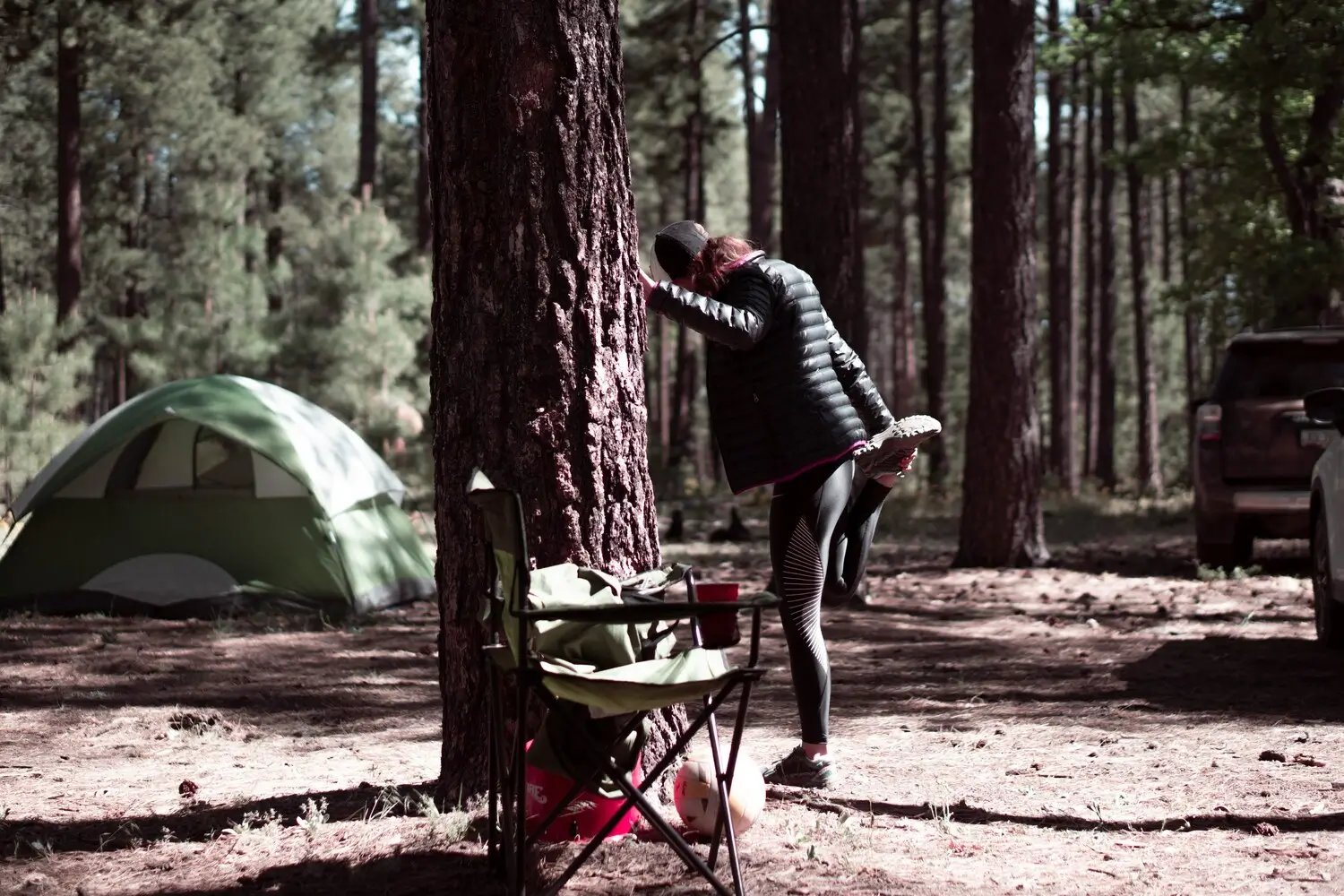
Setting Up Camp Right
A well-organized campsite is the foundation of a smooth trip, and most setup mistakes happen in the first thirty minutes of arrival. One of the simplest and most overlooked habits: always place your boots or shoes upside down outside the tent when you're not wearing them. This keeps insects, moisture, and debris out of the toe box. If you're wearing tall boots, nesting one inside the other creates a natural seal that also keeps rain off.
When entering your tent, go in arms and backside first rather than feet first — it's far easier to brush off your hands before you touch anything inside, and you avoid tracking dirt across the floor. Once your tent is pitched, cover the stake tops with a visible rock or small log so you don't catch them underfoot during a midnight bathroom run. And before it gets dark, deliberately walk your chosen path to the toilet area so the route is already familiar when you need it.
If your tent doesn't include a built-in footprint, place a small ground tarp just outside the entrance as a shoe-removal station. A heavy-duty contractor bag works just as well and doubles as an emergency shelter, a rain cover for gear, or a large-capacity trash bag — one of the most versatile items you can bring.
Quick Tip: Mark your tent stakes with bright tape or cord if you can't cover them with rocks — they're almost invisible at ground level in low light and easy to catch with a foot or trip over.
Safety & Site Awareness
Before you unpack a single item, take five minutes to assess your campsite with all your senses. Look up first — dead branches overhead are a genuine hazard in wind, and a surprisingly large number of camping injuries come from falling debris. Scan for wind tunnels between trees or rock formations that could destabilize your shelter in the night. Check the surrounding ground for poison ivy, animal trails, scat, or evidence of burrows. Ant colonies and snake dens are not always obvious until something emerges after dark.
Checking in with your senses isn't just about hazard avoidance — it's also how you begin to tune into the environment around you. Noticing the smell of the air, the sounds of the forest, and what's growing at ground level puts you in a much better position to make good decisions throughout the trip and to genuinely enjoy being there.
Quick Tip: Do a full site walk-around before dark, including checking the ground beneath and around your sleeping area. Problems that are easy to spot at 6 p.m. become much harder to identify at 2 a.m.
Clothing & Packing Light
Most campers bring too many clothes. For the majority of trips, a daytime set and a nighttime set is genuinely all you need — with one important exception: wool socks. Merino wool regulates temperature, resists odor, and stays warm even when damp, making it the one item worth bringing in multiples regardless of how aggressively you're trying to cut weight.
For your pillow situation, skip the dedicated camping pillow entirely. A pillowcase stuffed with the next day's outfit serves the same purpose at a fraction of the bulk and weight — and your clothes are already within reach when you wake up. Apply the same miniaturization logic across your toiletry kit: a half-sized toothbrush, single-use soap portions, and pre-dried toothpaste dots in a small bag replace their full-sized equivalents with no real sacrifice in function.
Quick Tip: Lay everything out before you pack, then remove roughly one third of it. The items you end up wishing you'd brought are almost never the clothing items — they're usually the comfort and convenience items.
Food, Water & Storage
Always bring slightly more food than you think you'll need. Outdoor activity increases caloric demand significantly, and appetite can be unpredictable — particularly on trips involving hiking or swimming. High-calorie, shelf-stable foods with balanced macronutrients are a practical backup for long days when a proper meal isn't happening. Electrolyte supplements are equally worthwhile, especially in heat or after strenuous activity.
Water is non-negotiable. A collapsible water container saves space while giving you meaningful capacity at camp, and a reliable filtration method — a pump filter, squeeze filter, or iodine tablets — means you're never fully dependent on what you carry in. Never bring food, scented toiletries, or anything with a smell into your tent. In bear country this is a safety requirement; everywhere else it's still good practice, since even small creatures are attracted to food odors and can cause real damage to gear.
Quick Tip: A weekly pill organizer makes a surprisingly effective compact spice kit. Pre-fill each compartment at home with the exact seasonings your meal plan calls for — no bulk containers needed.
Weather Readiness
A rain layer is not optional — it belongs in your pack regardless of the forecast. Even in fair weather, morning dew is universal, temperatures can drop sharply after sunset, and mountain conditions change faster than any app can predict. Hypothermia is one of the most common reasons for outdoor rescues, and it can occur at surprisingly mild temperatures when wind and moisture are combined. A packable rain jacket takes almost no space and can be the single most important piece of gear on your trip.
Check the weather forecast regularly — not just before you leave, but during the trip if you have connectivity. In state parks and national forests, fire risk ratings and burn bans are updated daily and can change from one morning to the next. Always verify current conditions through the managing agency's website before lighting anything.
Quick Tip: Download an offline weather app and cache the forecast for your area before you lose signal. Apps that show hourly wind speed and precipitation probability are more useful than basic daily summaries for planning campfire timing or hike windows.
Lighting & Improvised Shelter
Solar-powered lanterns are one of the most practical upgrades a regular camper can make. They charge during the day, provide hours of ambient light in the evening, and remove the dependency on battery management entirely. When selecting one, choose frosted bulbs over clear — bare LED light in a natural setting is harsh and disruptive to both your eyes and the surrounding wildlife. If all you have is a headlamp, placing it inside a frosted or white grocery bag diffuses the beam into workable ambient light.
For footwear around camp, a pair of lightweight slip-on shoes or sandals is worth bringing even on weight-conscious trips. Dedicated trail footwear is stiff, slow to put on, and overkill for walking ten meters to the water source.
Quick Tip: Hang your lantern from a central point — a trekking pole lashed to a tree, or a cord strung between two branches — rather than setting it on the ground, where it creates uneven light and more shadows.
Comfort & Personal Extras
Comfort in the outdoors is not indulgent — it's functional. A camper who sleeps well, keeps their back supported, and has something personally enjoyable to do in the evening will make better decisions and simply have a better time. Whatever makes the natural setting feel genuinely worth inhabiting rather than merely tolerated is worth the space it takes up.
One comfort item that applies nearly universally: a hot water bottle at bedtime. Heat water just before you turn in, seal it in a wide-mouth bottle, and place it at the foot of your sleeping bag. It radiates warmth for several hours and transforms the experience of getting into a cold bag on a cold night.
Quick Tip: For chronic back pain or anyone doing multi-day trips, a small foam sit pad doubles as insulation from cold ground, a kneeling surface for campfire work, and a meditation or yoga mat — four uses from a single item that weighs almost nothing.
Fire Skills & Campfire Confidence
Building a reliable campfire is one of the most satisfying skills in camping, and one of the most commonly done poorly. Large pieces of firewood need to be broken down into finer kindling before a fire will catch and sustain itself. Batoning is one of the best techniques for this: place your knife blade across the top of a log and strike the spine with another piece of wood to drive it through.
Build your fire in stages — tinder first, then progressively larger kindling, then your fuel logs once the fire is established and hot. Never skip the kindling stage. Trying to light large logs directly from a match is the single most common campfire failure. Once the fire is going, keep it manageable: a smaller, hotter fire is safer, more efficient for cooking, and easier to extinguish fully when you're done.
Quick Tip: Collect your tinder and kindling before you need them — ideally before dark. Dry grass, paper-thin bark, and dead pine needles are the most reliable natural fire starters. Keep them dry in a zip-lock bag until you're ready to build the fire.